
Korean food has been having a global moment, and that moment shows no signs of slowing down. Driven in part by the worldwide reach of K-pop culture and in part by the extraordinary quality of the cuisine itself, Korean food has moved from niche to mainstream in kitchens across the globe. And at the centre of that movement — perhaps the most searched, most pinned, and most recreated Korean dish outside of Korea — is bibimbap.
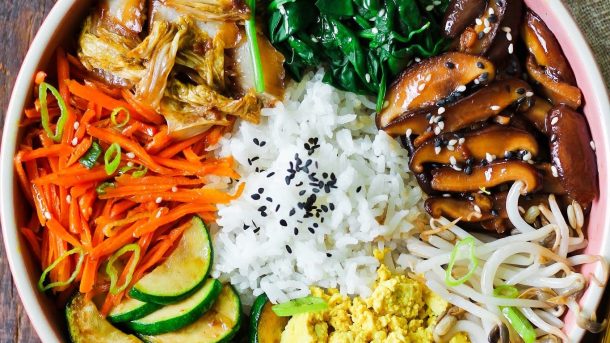
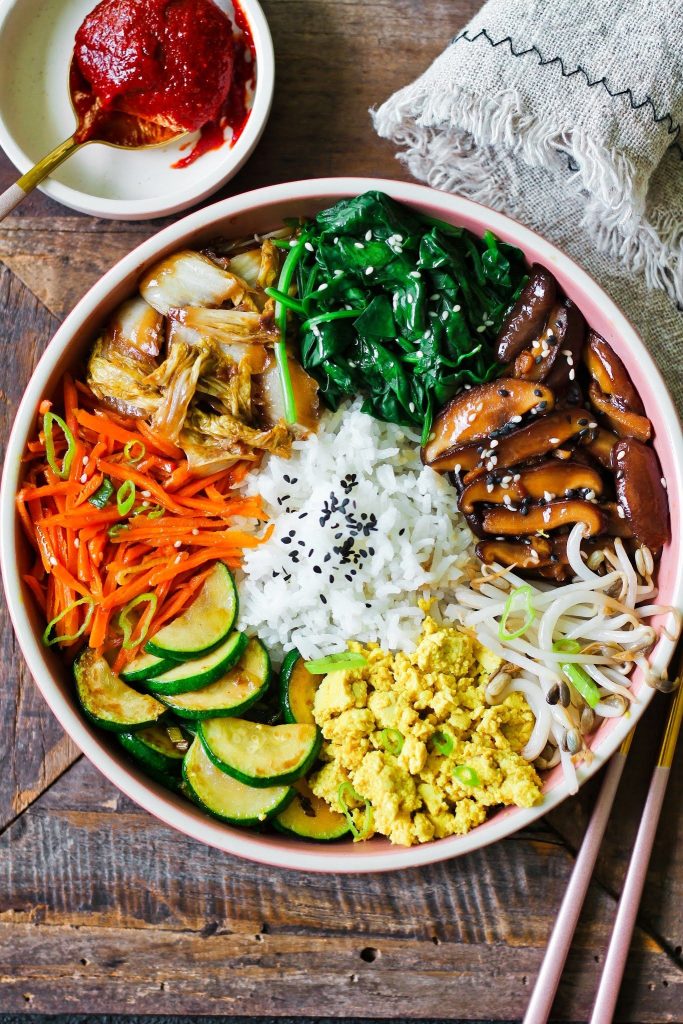
Bibimbap translates roughly as “mixed rice.” But that translation undersells it considerably. What it actually describes is one of the most elegant and satisfying rice dishes in any food culture: a bowl of warm rice topped with a rainbow of individually prepared vegetables, protein, a fried egg (or in this version, crispy tofu), and a dramatic drizzle of gochujang — a sweet-spicy fermented chilli paste that ties everything together in a way that produces genuine, repeated flavour revelations with each bite.
This plant-based version is completely authentic in spirit, deeply flavourful, and more achievable at home than it first appears. The components can be prepared in stages, and several can be made days in advance. It is a Sunday meal prep dream.
Understanding the Structure of Bibimbap
What makes bibimbap remarkable as a dish is its modularity. Unlike most bowl recipes where ingredients are combined and cooked together, bibimbap places each topping separately — which means each component retains its own distinct character, and the eater chooses how to mix them in each bite. You control the ratio. You decide when to stir the gochujang through. The bowl evolves from first bite to last.
The traditional components of a Korean bibimbap include: rice (always short-grain, always warm), namul (seasoned and sautéed vegetables), protein (egg or meat, here replaced with tofu), gochujang sauce, and sesame oil. Each namul is prepared individually — this is the most labour-intensive element, but it is also what gives the dish its textural and flavour range.
Ingredients (Serves 4)
For the crispy gochujang tofu:
- 400g extra-firm tofu, pressed for at least 30 minutes
- 2 tablespoons gochujang (Korean fermented chilli paste — check it is vegan)
- 1 tablespoon soy sauce
- 1 tablespoon maple syrup
- 1 tablespoon sesame oil
- 1 tablespoon rice vinegar
- 2 garlic cloves, grated
- 1 tablespoon cornstarch
- 1 tablespoon neutral oil (for pan-frying)
For the bibimbap sauce:
- 3 tablespoons gochujang
- 2 tablespoons sesame oil
- 1 tablespoon soy sauce
- 1 tablespoon maple syrup or rice syrup
- 1 tablespoon rice vinegar
- 2 garlic cloves, grated
- 1 teaspoon toasted sesame seeds
- 2 tablespoons water (to loosen)
For the namul (seasoned vegetables) — prepare individually:
- 200g baby spinach
- 200g bean sprouts
- 2 medium zucchini (courgettes), julienned
- 2 medium carrots, julienned
- 200g shiitake mushrooms, thinly sliced
- Soy sauce, sesame oil, garlic, sesame seeds (for seasoning each namul)
For the bowl:
- 400g short-grain white rice (or brown rice), cooked
- 4 tablespoons toasted sesame seeds
- 4 spring onions, thinly sliced
- Kimchi (vegan version, optional but excellent)
- Toasted nori, crumbled
Method
Step 1: Marinate and Cook the Tofu
Cut the pressed tofu into rectangles approximately 1cm thick. Combine gochujang, soy sauce, maple syrup, sesame oil, rice vinegar, and garlic in a bowl. Add the tofu and toss to coat. Marinate for at least 20 minutes (or overnight in the refrigerator for deeper flavour).
Dust the marinated tofu lightly with cornstarch. Heat neutral oil in a non-stick pan over high heat. Cook the tofu for three to four minutes per side until deeply caramelised and sticky. Set aside.
Step 2: Make the Bibimbap Sauce
Whisk together all sauce ingredients in a small bowl. Taste — it should be bold, spicy, sweet, and slightly sour. Adjust as desired. This sauce is powerful; a little goes a long way.
Step 3: Prepare the Namul
Each vegetable is seasoned and cooked separately. The standard seasoning for each is the same: a splash of soy sauce, a drizzle of sesame oil, a small amount of minced garlic, and sesame seeds. Adjust quantities to taste.
Spinach namul: Blanch the spinach in boiling water for 30 seconds. Drain, rinse with cold water, and squeeze firmly to remove all excess moisture. Season with soy sauce, sesame oil, a little garlic, and sesame seeds. Shape into a small mound and set aside.
Bean sprout namul: Blanch bean sprouts for two minutes. Drain, rinse, squeeze. Season identically to the spinach.
Zucchini namul: Sauté julienned zucchini in a little sesame oil over high heat for two to three minutes. Season with soy sauce and a pinch of salt.
Carrot namul: Sauté julienned carrot in a little sesame oil for three minutes until slightly softened but still holding texture. Season with soy sauce.
Shiitake mushroom namul: Sauté the sliced shiitake in sesame oil over medium-high heat for four to five minutes until golden. Add soy sauce and a little garlic. Cook for one more minute.
Step 4: Cook the Rice
Rinse the rice until the water runs clear. Cook using the absorption method: combine rinsed rice with water in a ratio of 1:1.2. Bring to a boil, cover, reduce to the lowest heat, and cook for 12 minutes. Remove from heat and steam, covered, for ten more minutes. Fluff gently with a fork.
Step 5: Assemble the Bibimbap
Use warmed bowls for the best result. Place a generous portion of rice in the centre of each bowl. Arrange the five namul in separate sections around the rice — the aesthetic arrangement is part of the tradition, with the different colours creating a rainbow effect. Place the crispy tofu in the centre or to one side. Add a spoonful of kimchi if using. Drizzle a generous tablespoon of bibimbap sauce over everything.
Sprinkle with toasted sesame seeds, spring onions, and crumbled nori. Serve with additional sauce on the side.
Step 6: Mix
This is the crucial and joyful step. At the table, mix everything together thoroughly — the rice, the vegetables, the tofu, the sauce. The act of mixing is both practical (distributing the sauce evenly) and characteristic (bibimbap means mixed rice). The bowl transforms completely when combined, and the flavours marry in a way that the separate components cannot achieve alone.
Make-Ahead and Meal Prep
Bibimbap is an outstanding meal prep recipe. The namul keep well in the refrigerator for three to four days in separate containers. The tofu can be cooked and refrigerated for up to three days. The sauce keeps for up to two weeks. When ready to eat, simply cook fresh rice and assemble — the meal comes together in five minutes.
This makes bibimbap one of the most practical healthy vegan meal prep recipes for the working week.
Nutrition
The nutritional range of a bibimbap bowl is extraordinary. Short-grain rice provides complex carbohydrates and energy. Tofu delivers complete plant protein. The five vegetable namul together contribute vitamins A, C, and K, iron, calcium, folate, and a range of phytonutrients and antioxidants. Sesame oil provides healthy monounsaturated fats and sesamin — a lignan with anti-inflammatory properties.
Gochujang contributes capsaicin — the compound responsible for chilli heat — which has been associated with improved metabolism and circulation in several research contexts. It is also naturally probiotic (the paste is fermented) and a source of vitamins B and C.
This bowl genuinely earns the description of a complete, balanced meal.
A Final Note on Gochujang
If you have never cooked with gochujang before, this recipe is the ideal introduction. It is one of the most versatile fermented condiments in any world cuisine — sticky, mildly spicy, complex, and slightly sweet. It works as a marinade, a glaze, a sauce base, and a condiment. Once you have a jar in your refrigerator, you will find uses for it constantly.
Buy a good-quality version (Korean-made is preferable) and check that it contains no fish sauce or shrimp paste for a fully vegan product — most standard versions are vegan, but it is worth verifying the label.
Explore more trending Korean-inspired plant-based recipes in our Website.