
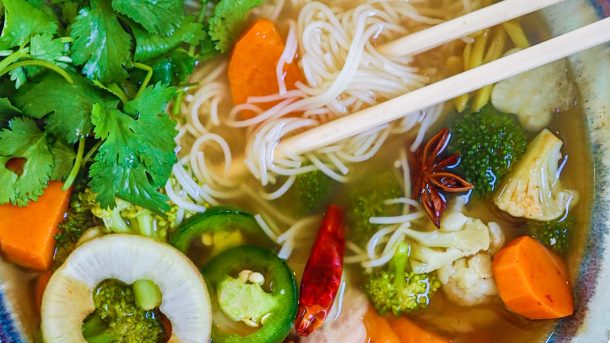
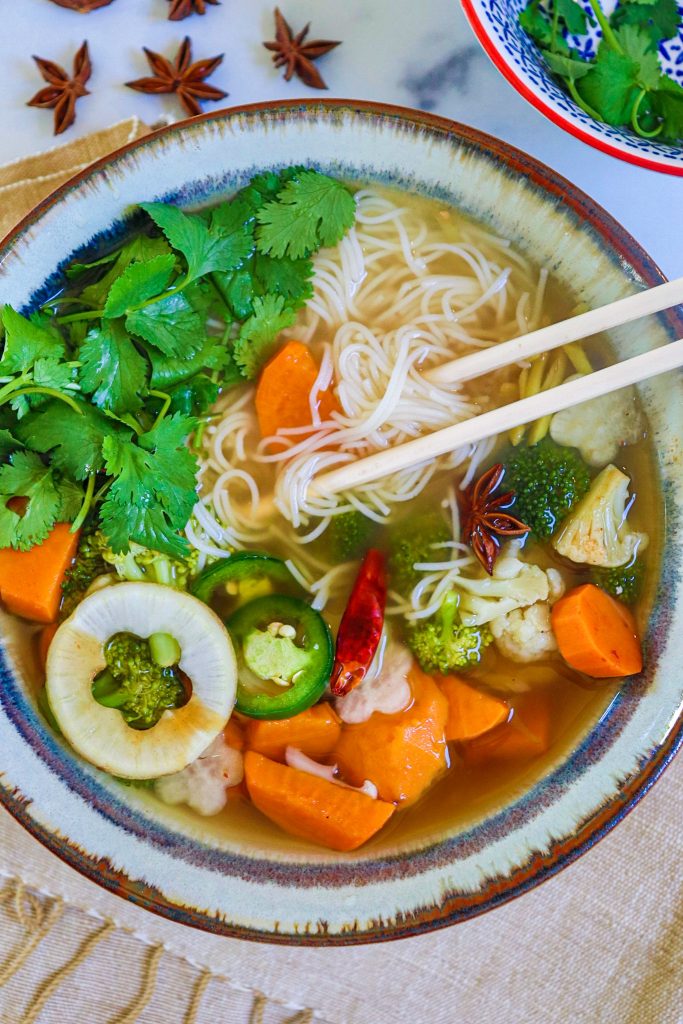
Pho is perhaps the most perfectly composed soup in the world. Not the most complex — there are broths that take longer, ingredients that are rarer, techniques that are more demanding. But in terms of the relationship between its elements — the clarity of the broth, the freshness of the herbs, the heat of the chilli, the give of the noodles, the depth of the aromatics — it achieves a balance that is almost mathematical in its precision.
Traditional pho is built on a beef bone broth simmered for hours with charred ginger and onion, star anise, cloves, cinnamon, and cardamom. The result is a broth of extraordinary fragrance and depth. The plant-based version presented here does not try to pretend that process away — instead, it replicates the flavour logic using roasted vegetables and dried mushrooms in place of bones, and the same charred aromatics and spice blend that give authentic pho its unmistakeable, warming fragrance.
The result is a vegan broth so good that it has become one of the most pinned and saved recipes across every major platform in 2025 and 2026. People who have eaten real pho in Hanoi find it convincing. People who are making pho for the first time find it manageable. It serves both audiences equally well.
The Key to the Broth: Charring the Aromatics
The step that most home cooks skip — and the step that most distinguishes authentic pho broth from an approximation — is the direct charring of the ginger and onion before they go into the pot.
Halve the ginger lengthways and the onion crossways. Place them cut-side down directly on a gas flame, under a hot grill, or in a dry cast-iron pan over maximum heat. Cook until the cut surfaces are deeply blackened — not lightly browned, but actually burnt. This char does two things: it removes the raw bite of the aromatics and replaces it with a deep, caramelised sweetness, and it contributes a subtle smokiness to the broth that is one of pho’s most characteristic background notes.
Do not be afraid of the blackening. It is correct and intentional.
Ingredients (Serves 4)
For the vegan pho broth:
- 3 litres cold water
- 20g dried shiitake mushrooms
- 10g dried porcini mushrooms
- 10g kombu seaweed
- 3 medium onions, halved crossways
- 8cm piece fresh ginger, halved lengthways
- 1 large head of garlic, halved crossways
- 2 medium carrots, roughly chopped
- 3 stalks celery, roughly chopped
- 3 tablespoons soy sauce or tamari
- 2 tablespoons vegan fish sauce or additional soy sauce
- 1 tablespoon dark soy sauce (for colour)
- 1 tablespoon coconut sugar or brown sugar
The spice sachet (tie in muslin or use a tea infuser):
- 4 star anise
- 1 cinnamon stick (7cm)
- 4 whole cloves
- 3 cardamom pods, lightly crushed
- 1 teaspoon black peppercorns
- 1 teaspoon coriander seeds
For the bowl:
- 400g flat rice noodles (bánh phở)
- 300g extra-firm tofu, pressed and thinly sliced, pan-fried until golden
- 200g baby bok choy, halved
- 100g bean sprouts
For the table (traditional pho garnishes):
- A large bunch of fresh Thai basil
- A large bunch of fresh coriander
- 2 fresh red chillies, thinly sliced
- 2 limes, quartered
- Hoisin sauce, to serve
- Sriracha or chilli oil, to serve
- Extra bean sprouts
Method
Step 1: Char the Aromatics
Place the halved onions, ginger, and garlic directly over a gas flame, under a grill on maximum heat, or in a very hot dry cast-iron pan. Cook until deeply charred on the cut surfaces — 3 to 5 minutes. Turn and char the skin side for another minute. The surfaces should be genuinely black, not just dark. Transfer to the soup pot.
Step 2: Build the Broth
In a large pot, combine the charred aromatics with the dried shiitake, porcini, and kombu. Add the carrots, celery, and 3 litres of cold water. Bring to a boil, then reduce to a low simmer. Skim any foam that rises in the first five minutes.
Add the spice sachet. Simmer gently, uncovered, for at least one hour — two hours produces a deeper, more developed broth. The kitchen will fill with one of the most extraordinary aromas imaginable.
Step 3: Strain and Season
Strain the broth through a fine-mesh sieve into a clean pot, discarding all solids (you can squeeze the mushrooms first to extract maximum flavour). The broth should be clear, amber-brown, and deeply fragrant.
Add the soy sauce, dark soy sauce, vegan fish sauce, and coconut sugar. Taste carefully and adjust — it should be savoury, slightly sweet, deeply aromatic, and clear in flavour. If it tastes flat, add a little more soy sauce. If it tastes too salty, add a splash of water.
Step 4: Prepare the Toppings
While the broth simmers, prepare the bowl elements. Pan-fry the sliced tofu in a little neutral oil until golden on both sides. Briefly blanch the bok choy in the simmering broth for 60 seconds, then remove. Cook the rice noodles according to packet instructions, drain, and rinse.
Step 5: Assemble
Warm your bowls. Divide the noodles between the bowls — they should fill about a third of the bowl. Arrange the tofu, bok choy, and bean sprouts over the noodles. Ladle the very hot broth over everything — it should fill the bowl and just cover the noodles. The heat of the broth will warm every component in the bowl.
Step 6: Serve with the Full Garnish Spread
Bring everything to the table at once: Thai basil, coriander, sliced chilli, lime wedges, hoisin sauce, and sriracha. Each person customises their bowl — this interactive element is part of what makes pho such a communal, enjoyable eating experience.
Squeeze lime over the broth before eating. Add basil and coriander directly into the bowl, allowing them to wilt slightly from the heat. Add chilli and hoisin to taste. Mix everything gently before eating.
The Patience Investment
I want to be clear: the broth takes time. One hour minimum, two hours for the best result. This is not an everyday weeknight recipe — it is a weekend project, a Sunday endeavour, a cooking meditation.
But the reward is proportional. The broth you produce after two hours of slow simmering is something you will not find in a packet or a store, and it will make every bowl of soup you serve remarkable.
Make a large batch — six to eight litres — and freeze it in portions. You will have vegan pho broth on hand for months, and each bowl thereafter takes less than fifteen minutes.
Nutrition
This soup is one of the most complete nutritional packages in Vietnamese cuisine. The broth, made with dried shiitake and kombu, is rich in iodine, B vitamins, and umami amino acids. Tofu provides complete plant protein. Bok choy delivers calcium, vitamin C, and folate. Bean sprouts are a source of vitamin C and easily digestible protein. Fresh Thai basil and coriander provide vitamin K and antioxidant compounds.
Rice noodles are naturally gluten-free and easy on digestion, making this a bowl that is both nourishing and gentle.
Final Thoughts
Pho is a dish with soul. It carries the flavours of an entire culture in a single bowl — the warmth of star anise, the fragrance of fresh herbs, the deep satisfaction of a long-simmered broth. Making it plant-based does not diminish any of that. It simply changes the source of the depth from bones to earth, and the result is no less extraordinary for the change.
Make it on a cold weekend. Set the table properly. Eat slowly.
Discover more warming international plant-based recipes in our Website.