
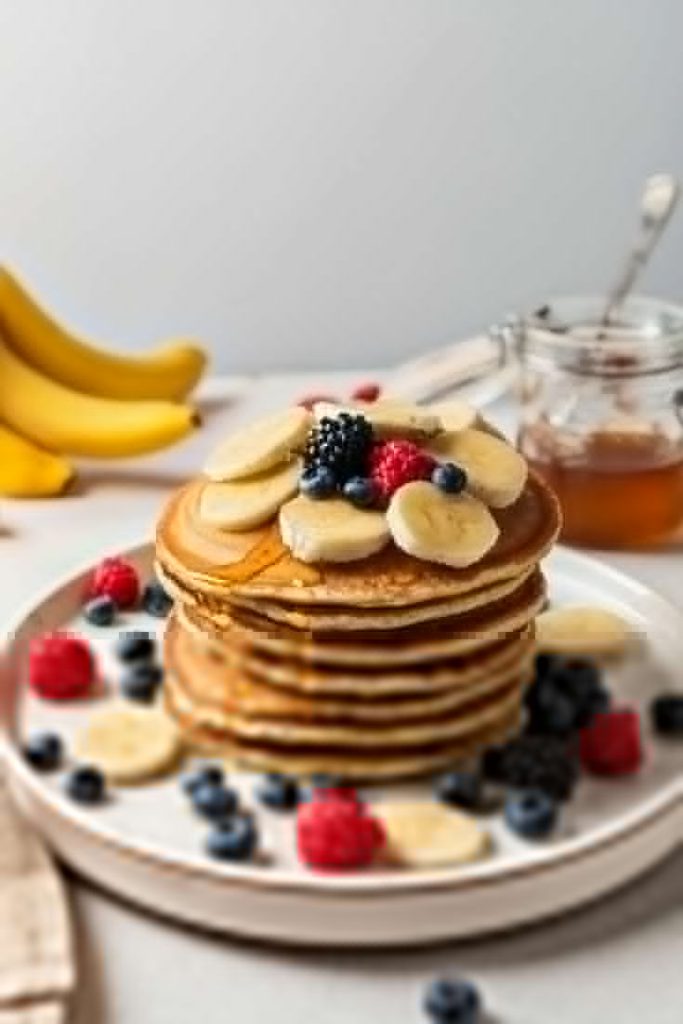
For a long time, I assumed that truly fluffy pancakes — the kind with height and airiness, that pull apart into soft, tender layers — required eggs. It seemed non-negotiable. The egg white, beaten into foam, was the structural mechanism that produced that lift. Without it, pancakes would be thin, dense, and disappointing.
I was wrong, and discovering how wrong I was remains one of my favourite moments in plant-based cooking.
These vegan pancakes are fluffy. Not almost-fluffy, not acceptable-for-vegan-pancakes fluffy, but genuinely, impressively fluffy. The secret is the vegan buttermilk — plant milk combined with apple cider vinegar — which reacts with the leavening agents to produce carbon dioxide bubbles throughout the batter, creating a light, airy texture that rivals anything eggs have to offer.
They are also, importantly, quick. From gathering the ingredients to stacking the first pancake takes under twenty minutes. This is Sunday morning food that does not ask you to wake up early.
Ingredients (Makes approximately 10–12 pancakes)
Dry ingredients:
- 200g plain flour
- 2 tablespoons caster sugar
- 2 teaspoons baking powder
- ½ teaspoon bicarbonate of soda
- ½ teaspoon fine salt
Wet ingredients:
- 240ml unsweetened oat milk (or any plant milk)
- 1 tablespoon apple cider vinegar
- 2 tablespoons neutral oil (plus extra for frying)
- 1 teaspoon vanilla extract
Method
Step 1: Make the Vegan Buttermilk
Combine the oat milk and apple cider vinegar in a jug. Stir once and set aside for five minutes. The milk will curdle slightly and thicken — this is exactly what you want. This vegan buttermilk reacts with the bicarbonate of soda during cooking to produce the lift that makes these pancakes exceptional.
Step 2: Combine Dry Ingredients
In a large bowl, whisk together the flour, sugar, baking powder, bicarbonate of soda, and salt. Ensure these are well combined — uneven distribution of leavening agents leads to inconsistent rise.
Step 3: Combine Wet and Dry
Add the oil and vanilla extract to the buttermilk mixture. Pour the wet ingredients into the dry ingredients and fold with a spatula until just combined. The batter should be thick, slightly lumpy, and should fall from the spatula in heavy ribbons. Do not overmix. Small lumps of flour are not only acceptable — they are desirable. Overmixed batter develops gluten and produces tough, chewy pancakes.
Let the batter rest for five minutes. This rest allows the leavening agents to begin working and the gluten to relax.
Step 4: Cook
Heat a non-stick pan or griddle over medium heat. Add a small amount of oil and allow it to heat until a drop of batter sizzles immediately on contact. This is the right temperature — too cool, and the pancakes spread without rising; too hot, and they brown on the outside before the centre is cooked.
Pour approximately 60ml of batter per pancake into the pan. Cook until bubbles appear across the entire surface and the edges look set — typically two to three minutes. Flip carefully with a wide spatula and cook for a further minute and a half on the other side. The second side will not brown as evenly as the first; this is entirely normal.
Keep finished pancakes warm in a low oven (100°C) while you cook the remaining batches.
Step 5: Serve
Stack the pancakes generously and serve with your choice of toppings.
Topping Ideas
The pancakes are excellent with nothing more than maple syrup. But for those who want something more:
Classic: Maple syrup, sliced banana, and a dusting of icing sugar.
Berry compote: Simmer 200g of mixed frozen berries with two tablespoons of maple syrup and a squeeze of lemon juice for five minutes. Spoon warm over the stack.
Peanut butter and banana: Spread a generous layer of peanut butter between each pancake, top with sliced banana and a drizzle of maple syrup. This is as indulgent as it sounds.
Lemon and sugar: The classic combination — a squeeze of lemon juice and a teaspoon of caster sugar over each pancake. Simple, perfect, and worth returning to.
Biscoff and cream: A drizzle of Biscoff spread (which happens to be vegan) and a dollop of whipped coconut cream for something genuinely decadent.
Troubleshooting
Pancakes spreading too thin: The batter is too loose. This can happen if the milk was measured too generously or the flour too conservatively. Stir a tablespoon of flour into the remaining batter and allow the pan to reach a higher temperature before the next pancake.
Pancakes not rising: The baking powder or bicarbonate of soda may be past its best. Test by dropping a small amount of bicarbonate of soda into hot water — if it fizzes vigorously, it is still active.
Pancakes sticking: The pan was not adequately oiled, or the heat was too low. Re-oil between each pancake and ensure the pan is properly preheated.
Pancakes too dense: The batter was overmixed or the pan temperature was too low. Both produce pancakes that do not rise properly.
Variations
Blueberry pancakes: Fold 150g of fresh or frozen blueberries into the batter after mixing. They burst as the pancakes cook, creating pockets of jammy sweetness throughout.
Chocolate chip pancakes: Fold 80g of vegan chocolate chips into the batter. Add a tablespoon of cocoa powder to the dry ingredients for a fully chocolate version.
Banana pancakes: Mash one ripe banana and add to the wet ingredients. Reduce the oil by half — the banana provides natural fat and moisture. These are particularly tender and naturally sweet.
Buckwheat pancakes: Replace half the plain flour with buckwheat flour for a nuttier, slightly more complex flavour. Buckwheat is also naturally gluten-free, though check that your particular flour is produced in a certified gluten-free facility.
Nutrition
These pancakes are a source of complex carbohydrates that provide sustained morning energy. Using oat milk adds beta-glucan fibre, which has been associated with improved blood cholesterol levels and stable blood sugar response. When topped with fresh fruit, the nutritional value increases considerably — berries in particular bring vitamin C and antioxidants, while banana contributes potassium and natural sugars for immediate energy.
Meal Prep and Storage
Leftover pancakes store well and reheat beautifully. Place cooled pancakes in a single layer on a baking tray and freeze until solid, then transfer to a freezer bag. Reheat directly from frozen in a toaster, in a dry pan over medium heat, or in an oven at 180°C for five minutes.
They also keep in the refrigerator for up to three days — store with squares of parchment between each pancake to prevent sticking.
Final Thoughts
The best Sunday morning is one that starts slowly, with the particular smell of something sweet and warm on the stove and the knowledge that nothing is required of you for at least the next hour. These pancakes are built for that morning. They are quick enough not to be a project and good enough to make the morning feel special.
Make them for yourself, for someone you are fond of, or for a table full of people on a leisurely weekend. They will always be the right choice.
Browse more simple, vibrant plant-based dinners in Website.