
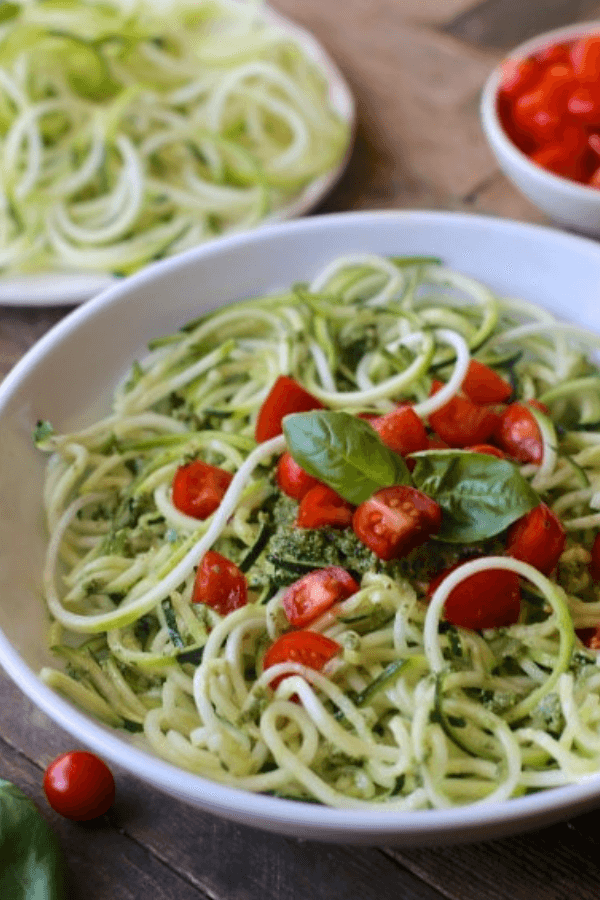
The best things you can say about a pasta dish are that it is quick, that it is deeply flavoured, and that it leaves you genuinely satisfied. This zucchini pasta with vegan basil pesto achieves all three with such ease that it has become my most reliable weeknight dinner. From the moment the pasta water goes on to the moment the bowl lands on the table is thirty minutes. The pesto, once you have made it, is a revelation.
Pesto is one of those preparations that most people assume requires Parmesan cheese to taste the way it should. It does not. The cheese provides fat, salt, and umami — all of which can be replicated with nutritional yeast and good-quality salt in a way that is so convincing I have served this to Italian friends without revealing its plant-based nature, and received no complaints. One of them asked for the recipe.
The zucchini in this dish serves two purposes. Sliced into thin ribbons and added at the last moment, it softens gently from the residual heat of the pasta, providing a delicate textural contrast to the firm pasta and a freshness that lifts the richness of the pesto. It also stretches the dish, extending two servings of pasta to four without anyone feeling short-changed.
On Making the Best Pesto
Pesto is a sauce that rewards quality ingredients above all else. It has very few of them, which means each one matters more:
Basil: Use the freshest basil you can find, with large, unblemished leaves. Tired basil produces tired pesto. If your basil has started to wilt, it is still usable, but the flavour will be less vibrant. Fresh is always better.
Olive oil: Use extra-virgin olive oil. This is not the place for a light or mild cooking oil — the flavour of the oil is central to the flavour of the pesto. A grassy, slightly peppery Sicilian or Ligurian oil is ideal.
Nutritional yeast: This is what replaces the Parmesan in terms of flavour function. Two to three tablespoons add a savoury, almost cheesy depth. Do not skip it. Do not substitute.
Pine nuts vs alternatives: Pine nuts are traditional and produce a pesto with a particular richness and sweetness. They are also expensive. Walnuts make an excellent, more economical substitute, producing a slightly earthier pesto that many people prefer. Blanched almonds are another option. Whatever you use, toast them first — even two minutes in a dry pan dramatically improves the flavour.
Ingredients (Serves 4)
For the vegan basil pesto:
- 60g fresh basil leaves, packed
- 60g pine nuts (or walnuts), toasted
- 3 garlic cloves
- 3 tablespoons nutritional yeast
- Juice of ½ lemon
- 120ml extra-virgin olive oil
- Salt and black pepper to taste
For the pasta:
- 400g pasta of your choice (linguine, spaghetti, or penne all work well)
- 3 medium zucchini (courgettes), sliced into thin ribbons with a peeler or mandoline
- 3 tablespoons olive oil
- 4 garlic cloves, thinly sliced
- ½ teaspoon chilli flakes
- 150g cherry tomatoes, halved
- 50ml pasta cooking water (reserved before draining)
- Salt for the pasta water
To serve:
- Extra nutritional yeast or vegan Parmesan
- Fresh basil leaves
- Toasted pine nuts
- Freshly cracked black pepper
- Lemon zest
Method
Step 1: Make the Pesto
Toast the pine nuts in a dry pan over medium heat for 2 to 3 minutes, stirring, until lightly golden and fragrant. Watch them carefully — they burn quickly.
Place the basil, toasted pine nuts, garlic, and nutritional yeast in a food processor. Pulse several times until roughly combined. With the processor running, pour in the olive oil in a steady stream until the pesto reaches your preferred consistency — some people like it smooth, others prefer it chunky and textured. Season generously with salt, pepper, and lemon juice. Taste and adjust.
If you do not have a food processor, a blender works, or you can make it the traditional way in a mortar and pestle — starting with the garlic and salt, then adding the nuts, then the basil, and finally incorporating the oil by hand. The mortar and pestle method produces a more textured, more aromatic pesto that is arguably superior to the machine version.
Step 2: Cook the Pasta
Bring a large pot of water to a rolling boil. Season generously with salt — pasta water should taste pleasantly salty, like a mild broth. Cook the pasta according to packet instructions until al dente. Before draining, scoop out at least 100ml of pasta cooking water with a ladle or mug. This starchy water will help the pesto sauce cling to the pasta.
Step 3: Prepare the Zucchini
While the pasta cooks, use a vegetable peeler or mandoline to create thin ribbons from the zucchini. Run the peeler along the length of each courgette, rotating as you go. Stop when you reach the seedy core. The ribbons only need a minute in the pan — they cook through very quickly.
Step 4: Build the Sauce
Heat the olive oil in a wide pan over medium heat. Add the sliced garlic and chilli flakes. Cook gently for one to two minutes until the garlic is just golden — not brown. Add the cherry tomatoes, increase the heat slightly, and cook for three to four minutes until they begin to soften and blister.
Step 5: Combine
Add the drained pasta to the pan. Add two to three tablespoons of the reserved pasta water and stir vigorously — this emulsifies the starchy water with the oil, creating a light sauce that helps the pesto adhere. Add the zucchini ribbons and toss briefly. Remove from heat.
Spoon the pesto over the pasta and toss gently to coat, adding more pasta water if needed to loosen. The heat of the pasta will warm the pesto without cooking it — which is important, as cooking basil intensifies bitterness and dulls the vibrant green colour.
Step 6: Serve
Divide between warmed bowls immediately. Finish with extra nutritional yeast, toasted pine nuts, fresh basil leaves, lemon zest, and plenty of cracked black pepper.
Nutrition
This dish is an excellent source of complex carbohydrates for sustained energy, healthy fats from the olive oil and pine nuts, and plant-based protein and B vitamins from the nutritional yeast. Zucchini is low in calories and high in potassium and vitamin C. Basil, often overlooked nutritionally, provides a meaningful source of vitamin K.
For additional protein, stir in 200g of cooked white beans or chickpeas during step 4, or serve alongside a simple tomato and white bean salad.
Storage
Leftover pasta stores in the refrigerator for up to three days, though the pasta will absorb more pesto as it sits and may benefit from a drizzle of extra olive oil when reheating. Reheat gently in a pan with a splash of water.
The pesto itself stores beautifully. Pour into a clean jar, top with a thin layer of olive oil to prevent oxidation, and refrigerate for up to a week. It also freezes well in ice cube trays — pop the frozen cubes into a bag and use as needed.
Final Thoughts
There are dishes that impress through their complexity, and there are dishes that impress through their simplicity. This pasta belongs firmly in the second category. The pesto is so good on its own terms that it asks very little of the dish around it. Give it good pasta, fresh zucchini, a scattering of cherry tomatoes, and it does everything else itself.
Make the pesto in a larger batch than you need. You will find uses for it every day of the week.
Browse more simple, vibrant plant-based dinners in Website.