meatless Monday dinner

Smoky Pulled Mushroom Tacos: The Plant-Based Taco That Will Change How You Think About Fungi

Tacos are perhaps the most democratic food in existence. They welcome every filling, every flavour profile, every cultural influence with equal hospitality. They are fast to assemble, endlessly customisable, and almost universally enjoyed. The taco is the vehicle; the filling is the conversation.

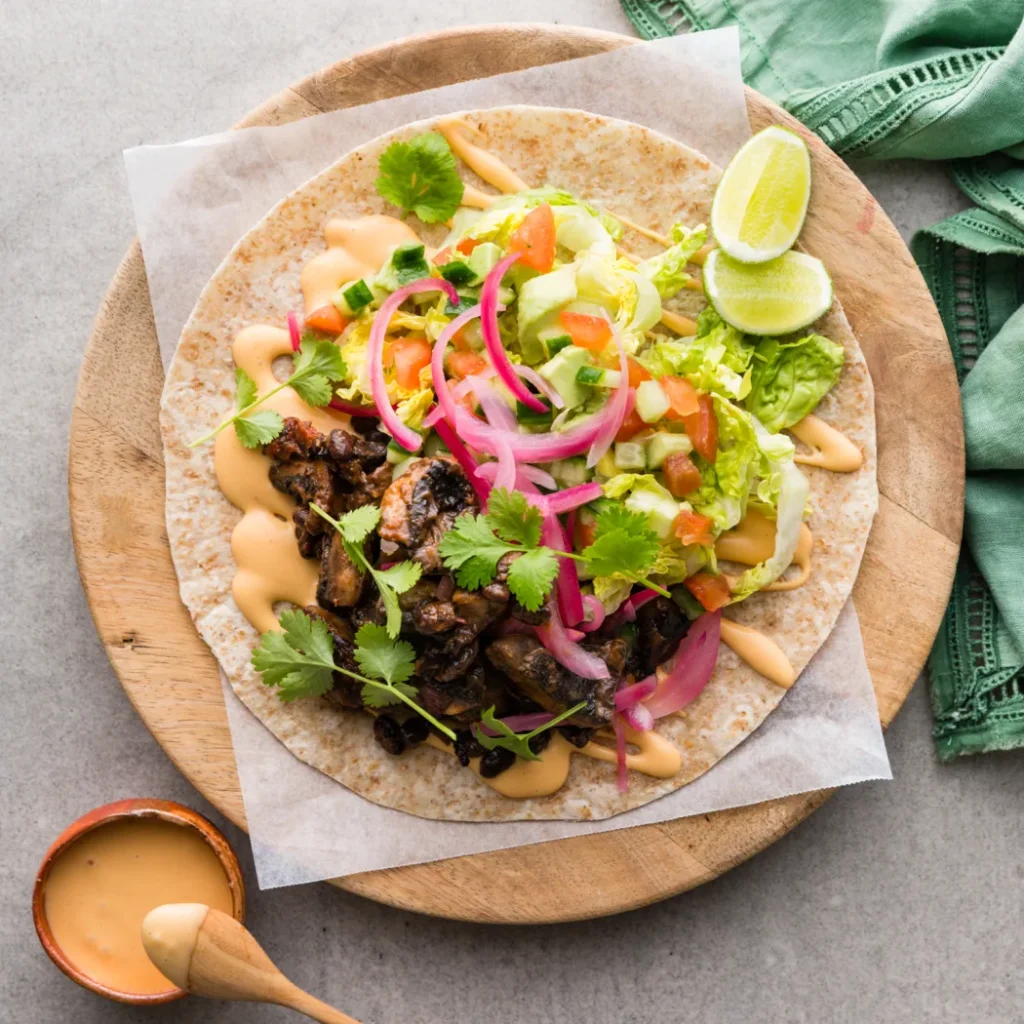
These smoky pulled mushroom tacos are a conversation worth having. King oyster mushrooms — also sold as trumpet mushrooms or eryngii — have a fibrous, almost meaty texture when shredded and cooked over high heat. They absorb the surrounding flavours readily, caramelise beautifully in a hot pan, and develop a pulled, stringy quality that is so satisfying it requires no comparison to anything else. It simply is what it is: excellent food.

The seasoning here draws from Mexican cooking traditions — achiote, smoked paprika, cumin, and chipotle — and the result is a deeply savoury, slightly smoky, mildly spicy filling that pairs perfectly with warm corn tortillas and a sharp, cooling tomatillo salsa.

Why King Oyster Mushrooms?

You can make pulled mushroom tacos with a number of varieties, but king oyster mushrooms are the clear first choice. Their dense, meaty stems have a texture that shreds convincingly along natural grain lines, rather than crumbling or becoming soft as other mushrooms do when cooked. They are also mild in flavour, which means they absorb marinades and seasonings deeply rather than competing with them.

If king oyster mushrooms are unavailable, large portobello mushrooms — thickly sliced rather than shredded — work reasonably well. Oyster mushrooms, torn into large pieces, are another option. The technique and seasoning remain the same regardless of variety.

Ingredients (Serves 4, approximately 2–3 tacos per person)

For the pulled mushrooms:

  • 600g king oyster mushrooms
  • 3 tablespoons soy sauce or tamari
  • 2 tablespoons olive oil
  • 2 tablespoons fresh lime juice
  • 2 tablespoons tomato paste
  • 1 teaspoon liquid smoke (or an additional teaspoon of smoked paprika)
  • 2 teaspoons smoked paprika
  • 1½ teaspoons ground cumin
  • 1 teaspoon garlic powder
  • 1 teaspoon onion powder
  • 1 teaspoon dried oregano
  • ½ teaspoon chipotle powder or chilli flakes
  • ½ teaspoon black pepper
  • 1 teaspoon maple syrup

For the tomatillo salsa:

  • 400g tomatillos (or green tomatoes), roughly chopped
  • 1 small white onion, roughly diced
  • 2 garlic cloves
  • 1 jalapeño, seeded if you prefer less heat
  • A large handful of fresh coriander
  • Juice of 1 lime
  • Salt to taste

For the pickled red onion:

  • 1 large red onion, very thinly sliced
  • 100ml apple cider vinegar
  • 100ml water
  • 1 tablespoon sugar
  • 1 teaspoon salt

To serve:

  • 12 small corn tortillas
  • Sliced avocado or guacamole
  • Fresh coriander
  • Lime wedges
  • Vegan sour cream or cashew cream
  • Hot sauce

Method

Step 1: Quick-Pickle the Red Onion (do this first)

Combine the apple cider vinegar, water, sugar, and salt in a small saucepan. Heat over medium heat, stirring until the sugar and salt dissolve. Pour the hot brine over the sliced red onion in a heatproof bowl or jar. Leave to cool at room temperature for at least 30 minutes. The onions will turn a vivid pink and become pleasantly tangy and tender. These can be made up to a week in advance and stored in the refrigerator — they improve with time.

Step 2: Shred the Mushrooms

Clean the mushrooms with a damp cloth. Trim the very base of the stems. Using two forks, or simply your hands, shred the mushrooms along their natural grain into thin, fibrous strips. The goal is pieces that roughly resemble pulled meat — not uniform chunks, but irregular, fibrous shreds of varying lengths.

Step 3: Make the Marinade

In a large bowl, whisk together the soy sauce, olive oil, lime juice, tomato paste, liquid smoke, smoked paprika, cumin, garlic powder, onion powder, oregano, chipotle powder, black pepper, and maple syrup. Add the shredded mushrooms and toss to coat thoroughly. The marinade should coat every strand. Leave to marinate for at least 15 minutes, or up to two hours for deeper flavour absorption.

Step 4: Cook the Mushrooms

Heat a large, wide pan or cast-iron skillet over high heat. You want very high heat — this is what produces the caramelised, slightly charred edges that give the mushrooms their depth of flavour.

Add the marinated mushrooms to the dry pan (or with a very small amount of additional oil if needed) and spread in a single layer. Do not stir for two to three minutes — allow them to char and caramelise on one side. Then toss and continue cooking, spreading and pressing occasionally, for another five to six minutes until the mushrooms are deeply golden, slightly crispy at the edges, and most of the marinade has been absorbed and caramelised. Season with salt.

Step 5: Make the Tomatillo Salsa

Blend the tomatillos, white onion, garlic, jalapeño, and coriander in a blender or food processor until roughly smooth — a little texture is desirable. Season generously with lime juice and salt. Taste and adjust. The salsa should be bright, tangy, and have a good level of heat. It can be made in advance and refrigerated for up to three days.

Step 6: Warm the Tortillas

Warm the corn tortillas directly over a gas flame for 20 to 30 seconds per side until charred in spots and pliable, or in a dry pan over high heat. Keep warm wrapped in a clean tea towel.

Step 7: Assemble and Serve

Double up the tortillas for structural integrity — this is the correct way to serve corn tortillas. Layer each double tortilla with a generous spoonful of pulled mushrooms, a drizzle of tomatillo salsa, a small pile of pickled red onion, sliced avocado, and a scattered handful of fresh coriander. Serve with lime wedges, vegan sour cream, and hot sauce on the side.

The Case for Corn Tortillas

Flour tortillas are softer, more pliable, and more forgiving to work with. Corn tortillas are the correct choice for street-style tacos. They have a distinct flavour — slightly earthy and faintly sweet from the masa — that flour tortillas simply do not replicate. They are also naturally gluten-free and have a more interesting nutritional profile, being made from nixtamalised corn that has higher available calcium and amino acid content than regular corn flour.

Their one drawback is fragility — they tear more easily than flour tortillas. Doubling them resolves this completely and is authentic to how they are served in Mexico.

Nutrition

King oyster mushrooms are nutritionally impressive in a way that many people do not expect. They are a meaningful source of ergothioneine — a unique antioxidant with no plant-based equivalent — as well as beta-glucan fibre that supports immune function and healthy cholesterol levels. They also provide B vitamins, particularly riboflavin and niacin, and small amounts of vitamin D.

The combination of beans and corn tortillas in this meal provides a complete amino acid profile across the meal as a whole, making these tacos a nutritionally well-rounded dinner without any supplementation.

Entertaining with These Tacos

These mushroom tacos are outstanding for entertaining because the components can all be prepared in advance and assembled at the table. Set out the warm mushrooms, tomatillo salsa, pickled onions, avocado, sour cream, hot sauce, coriander, and lime wedges in separate small bowls and let guests assemble their own. This approach — the taco bar — is one of the most reliably enjoyable formats for casual gatherings.

Final Thoughts

The mushroom taco is not a compromise. It does not sit apologetically beside its meat counterpart, hoping to be judged on a different scale. It is simply a great taco — smoky, textural, complex, and deeply satisfying — that happens to be made entirely from plants.

Make it on Taco Tuesday. Make it on any day that needs improving. It will deliver every time.


Discover more creative plant-based recipes in our Website.
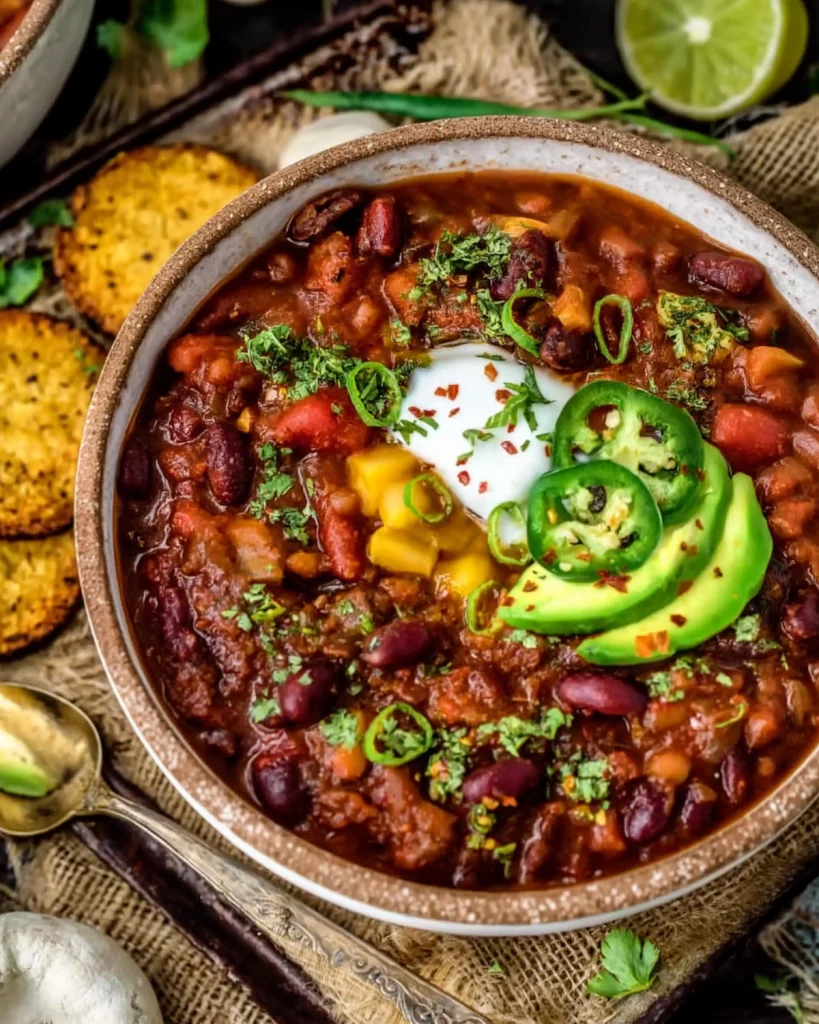
The Best Vegan Chili: A Three-Bean Pot That Gets Better Every Day

A great chili is one of cooking’s most honest achievements. It does not ask for complicated technique or expensive ingredients. It asks for time, patience, good spices, and the willingness to let it simmer until it becomes something greater than the sum of its parts. What you end up with — a deeply flavoured, slightly smoky, richly seasoned pot of beans and vegetables — is the kind of food that fills a kitchen with warmth and a table with contentment.

This three-bean vegan chili has become, without exaggeration, the most-requested recipe among everyone who has tried it. The combination of kidney beans, black beans, and pinto beans gives the chili a complexity of texture and flavour that single-bean versions lack. The spice blend is layered and deliberate. And the addition of dark chocolate — yes, chocolate — at the end is the detail that makes people ask the question.

“What is that flavour? What did you put in this?”

The answer is always worth seeing their faces when you tell them.

The Role of Each Ingredient

Before the recipe, a brief word on why certain ingredients are here:

Three beans: Different beans bring different textures. Kidney beans are firm and substantial. Black beans are softer and earthier. Pinto beans sit somewhere in between. Together, they create a chili with textural dimension.

Dark chocolate: A small amount of good-quality dark chocolate (70% or above) added at the end of cooking adds depth, a subtle bitterness, and a richness that is felt rather than tasted. It is a technique used across Mexican mole cuisine and works extraordinarily well in chili.

Coffee: Brewed black coffee, added during cooking, deepens the umami of the dish without imparting a discernible coffee flavour. It is optional but worth including.

Apple cider vinegar: Added at the very end of cooking, a tablespoon of vinegar brightens the entire pot and balances the richness of the beans and spices.

Ingredients (Serves 8)

  • 1 can (400g) kidney beans, drained and rinsed
  • 1 can (400g) black beans, drained and rinsed
  • 1 can (400g) pinto beans, drained and rinsed
  • 2 cans (800g) chopped tomatoes
  • 3 tablespoons tomato paste
  • 500ml vegetable stock
  • 100ml brewed black coffee (optional)
  • 2 large onions, finely diced
  • 6 garlic cloves, minced
  • 2 red bell peppers, diced
  • 2 stalks celery, diced
  • 1 jalapeño, finely diced (optional)
  • 3 tablespoons olive oil
  • 3 teaspoons ground cumin
  • 2 teaspoons smoked paprika
  • 2 teaspoons chilli powder
  • 1 teaspoon ground coriander
  • 1 teaspoon dried oregano
  • ½ teaspoon ground cinnamon
  • ½ teaspoon cayenne pepper (adjust to heat preference)
  • 30g dark chocolate (70%+), roughly chopped
  • 1 tablespoon apple cider vinegar
  • 1 tablespoon soy sauce
  • Salt and pepper to taste

To serve: Steamed rice or cornbread, sliced avocado, vegan sour cream, fresh coriander, lime wedges, jalapeño slices

Method

Step 1: Build the Aromatics

Heat the olive oil in a large, heavy-bottomed pot over medium heat. Add the onions, celery, and red peppers with a good pinch of salt. Cook for 10 to 12 minutes, stirring occasionally, until the vegetables are soft and the onions are beginning to turn golden. Add the garlic and jalapeño (if using) and cook for two more minutes.

Step 2: Toast the Spices

Add all the dried spices: cumin, smoked paprika, chilli powder, ground coriander, oregano, cinnamon, and cayenne. Stir constantly for 90 seconds — the spices will become fragrant and the bottom of the pot may begin to darken slightly. This is the blooming step: it transforms the raw, slightly harsh flavour of dried spices into something rounded and complex.

Step 3: Add the Tomatoes and Liquids

Add the tomato paste and stir for two minutes to caramelise it. Pour in the chopped tomatoes, soy sauce, vegetable stock, and coffee if using. Stir well to scrape any caramelised bits from the bottom of the pot.

Step 4: Add the Beans and Simmer

Add all three types of drained beans. Stir to combine. Bring to a boil, then reduce to a low, steady simmer. Cook uncovered for 35 to 45 minutes, stirring occasionally, until the chili has thickened to your preferred consistency and the flavours have deepened significantly. A thick chili clings to a spoon; a thinner one flows. Both are correct — adjust the cooking time to preference.

Step 5: The Final Touches

Remove from heat. Add the chopped dark chocolate and stir until completely melted. Add the apple cider vinegar and stir. Taste carefully and season with salt and pepper. This final tasting and seasoning step is not optional — it transforms a good chili into a great one.

Step 6: Rest and Serve

Allow the chili to rest for 10 minutes before serving. This resting time allows the flavours to settle and the consistency to stabilise. Serve over steamed rice or with warm cornbread, topped with sliced avocado, fresh coriander, a squeeze of lime, and vegan sour cream.

Day Two is Better

I will make a direct recommendation: make this chili the day before you plan to serve it. The flavours of a chili — the interplay of spices, beans, tomato, and chocolate — continue to develop as it rests. A 24-hour-old chili is measurably better than a freshly made one. This makes it ideal for dinner parties, meal prepping, and any situation where you want excellent food with minimal same-day effort.

Storage and Freezing

Refrigerate in sealed containers for up to five days. Freeze in portions for up to four months. This is one of the best freezer meals you can make — it thaws and reheats beautifully, with no loss of flavour or texture.

Nutrition

This chili is genuinely one of the most nutritionally complete meals in this collection. Three varieties of beans provide a combined total of approximately 25 grams of protein per serving, along with extraordinary amounts of dietary fibre — approximately 20 grams per serving — iron, potassium, folate, and complex carbohydrates. The fibre content alone makes this one of the best gut-health meals you can eat.

Dark chocolate contributes flavanols — powerful antioxidants with established cardiovascular benefits — and adds iron. Tomatoes provide lycopene, and the bell peppers contribute more vitamin C per serving than most citrus fruits.

A Recipe Worth Keeping

Every cook should have one chili recipe that they know inside out — one that they can make from memory, adjust by instinct, and serve with confidence on any occasion. This is the recipe I would offer for that role.

Make it once, make it twice, and then make it yours.


Find more hearty plant-based meals in our Website.

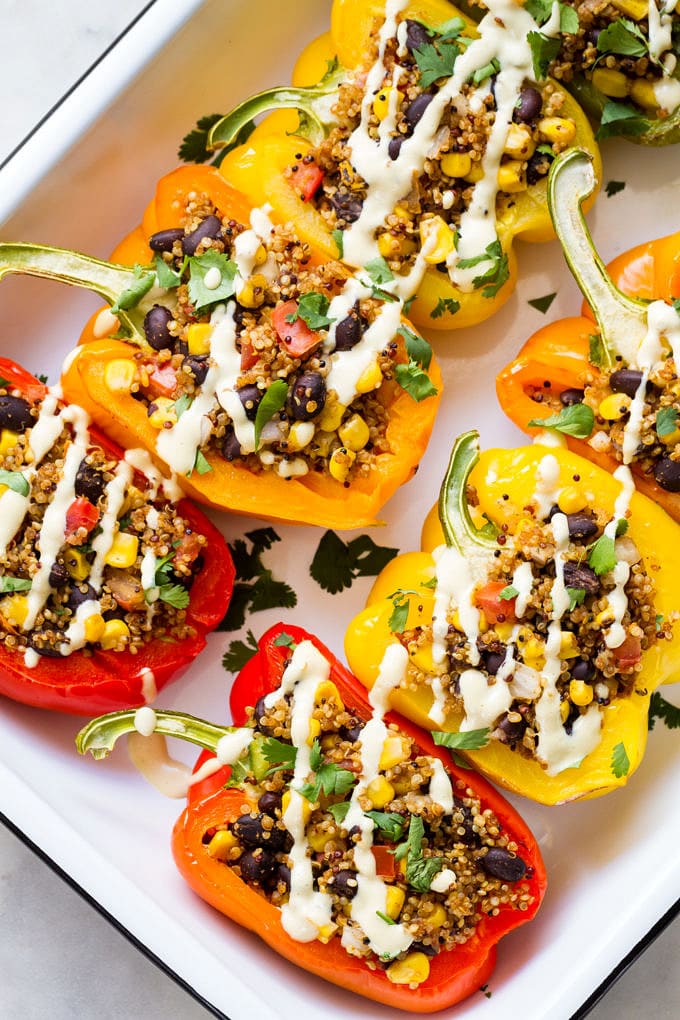
Stuffed Bell Peppers with Quinoa and Black Beans: A Vibrant Vegan Dinner

There is something inherently appealing about a stuffed vegetable. It is a dish with visual confidence — whole, colourful, and presented with an honesty that says exactly what it is. A stuffed pepper brings the container and the meal together into a single, self-sufficient package, and that simplicity is part of its enduring charm.

These quinoa and black bean stuffed bell peppers are everything a weeknight dinner should be: uncomplicated to prepare, genuinely satisfying to eat, and versatile enough to accommodate whatever you have in the pantry. The filling is warm, spiced, and deeply flavoured. The peppers soften in the oven until they are tender and slightly caramelised. Together, they make a complete meal with very little cleanup required.

What I particularly like about this recipe is how well it scales. A single tray accommodates six large peppers, which is enough to feed a family or provide meal-prepped lunches through the week. The filling is also excellent on its own — served over rice, wrapped in a tortilla, or simply eaten from the pan with a spoon. It is one of those versatile base recipes that earns its place in any cook’s rotation.

Choosing Your Peppers

Bell peppers come in four colours at most supermarkets — green, yellow, orange, and red — and they are not interchangeable in terms of flavour. Green peppers are the least ripe and have a distinct bitterness that some find appealing and others find challenging. Red, orange, and yellow peppers are all sweeter — they have been allowed to ripen longer on the plant, converting their chlorophyll to carotenoids as they develop their colour and sweetness.

For this recipe, red and orange peppers are the most complementary to the filling’s warm spice profile. Their natural sweetness balances the cumin and chilli beautifully. Yellow peppers also work well. Green peppers are not ideal here — their bitterness can compete with rather than complement the filling.

Choose peppers that are firm, glossy, and have a flat bottom — they will sit more stably in the baking dish.

Ingredients (Serves 6)

For the filling:

  • 200g quinoa, rinsed
  • 2 cans (800g) black beans, drained and rinsed
  • 1 can (400g) chopped tomatoes
  • 1 can (200g) sweetcorn, drained
  • 1 medium onion, finely diced
  • 4 garlic cloves, minced
  • 1 jalapeño, finely diced (optional)
  • 2 teaspoons ground cumin
  • 1½ teaspoons smoked paprika
  • 1 teaspoon chilli powder
  • 1 teaspoon dried oregano
  • 2 tablespoons olive oil
  • Salt and pepper to taste
  • A large handful of fresh coriander, roughly chopped
  • Juice of 1 lime

For the peppers:

  • 6 large bell peppers (red, orange, or yellow)
  • 2 tablespoons olive oil
  • Salt and pepper

To serve:

  • Sliced avocado or guacamole
  • Vegan sour cream or cashew cream
  • Extra lime wedges and coriander
  • Hot sauce

Method

Step 1: Cook the Quinoa

Rinse the quinoa thoroughly in a fine-mesh sieve under cold running water — this removes the naturally occurring saponins on the surface that can taste bitter. Place in a saucepan with 400ml of water and a pinch of salt. Bring to a boil, reduce to a very low simmer, cover, and cook for 12 to 15 minutes until all the water has been absorbed and the quinoa is tender with small white tails visible. Remove from heat and leave covered for five minutes, then fluff with a fork.

Step 2: Prepare the Peppers

Preheat the oven to 200°C (180°C fan). Slice the tops off the peppers and remove the seeds and membranes from inside. If any peppers wobble, slice a very thin sliver from the bottom to create a stable base — be careful not to cut through to the hollow interior.

Brush the outside of the peppers lightly with olive oil, season with salt and pepper, and arrange upright in a baking dish. If the peppers lean against each other, that is perfectly fine — they will support each other during baking.

Pre-bake the empty pepper shells for 15 minutes. This head start ensures they will be fully tender by the time the filling is heated through — skipping this step often results in peppers that are still slightly firm when the filling is ready.

Step 3: Make the Filling

While the peppers pre-bake, heat olive oil in a large pan over medium heat. Add the onion and cook for 7 to 8 minutes until softened and golden. Add the garlic and jalapeño (if using) and cook for one more minute. Add the cumin, smoked paprika, chilli powder, and oregano. Stir for one minute to bloom the spices.

Add the chopped tomatoes, stir well, and simmer for 5 minutes. Add the black beans, sweetcorn, and cooked quinoa. Stir to combine and season generously with salt and pepper. Simmer for three to four minutes to allow the flavours to integrate. Remove from heat and stir in the fresh coriander and lime juice.

Step 4: Fill and Bake

Remove the pre-baked pepper shells from the oven. Spoon the filling generously into each pepper, packing it firmly and mounding it above the rim. Return to the oven and bake for a further 20 to 25 minutes, until the peppers are completely tender and beginning to char slightly at the edges.

Step 5: Serve

Allow to rest for five minutes. Serve with sliced avocado, a dollop of vegan sour cream or cashew cream, extra lime wedges, and fresh coriander.

Why Quinoa Is Worth Using Here

Quinoa has earned a somewhat polarising reputation — sometimes celebrated, sometimes mocked for its association with a certain style of wellness culture. Setting aside that baggage, it is simply a very good ingredient, and this is an ideal recipe to see why.

Quinoa is one of the rare plant foods that provides all nine essential amino acids in meaningful quantities, making it a complete protein source. It also cooks relatively quickly, has a pleasant, slightly nutty flavour, and absorbs surrounding seasonings beautifully. In this filling, it provides bulk and protein alongside the black beans, creating a genuinely satisfying and nutritionally well-rounded meal.

Each serving of two stuffed peppers provides approximately 20 grams of protein, 14 grams of fibre, and substantial amounts of vitamins A and C from the peppers themselves.

Make-Ahead and Storage

The filling can be made up to two days in advance and refrigerated in a sealed container. The pre-baked pepper shells can also be prepared a day ahead. When ready to eat, simply fill and bake as directed, adding five extra minutes of baking time if the filling is cold.

Leftover stuffed peppers store well in the refrigerator for up to three days. Reheat in a 180°C oven for 15 minutes, or microwave individual peppers for two to three minutes.

The filling freezes well — freeze in portions for up to three months and thaw overnight before using. Fully assembled and baked peppers do not freeze as successfully, as the pepper can become very soft on thawing.

Variations

Mediterranean style: Replace the cumin and chilli with dried oregano and basil. Use white beans instead of black beans, add chopped sun-dried tomatoes and kalamata olives to the filling, and finish with pine nuts and fresh basil.

Indian-spiced: Use brown rice instead of quinoa, swap black beans for chickpeas, and season the filling with garam masala, turmeric, and ginger. Serve with a drizzle of mango chutney.

Mushroom and lentil: Replace the quinoa and beans with cooked Puy lentils and finely diced sautéed mushrooms for a heartier, earthier filling.

Final Thoughts

Stuffed peppers are one of those reliable recipes that asks very little of you in terms of technique but rewards you consistently. They look impressive on the table. They travel well in lunch containers. They reheat beautifully. And they are the kind of dish that adapts gracefully to whatever your pantry offers on a given evening.

Make them once, and they will become part of your regular rotation. That is the best thing I can say about any recipe.


Find more nourishing plant-based recipes in our Website.