
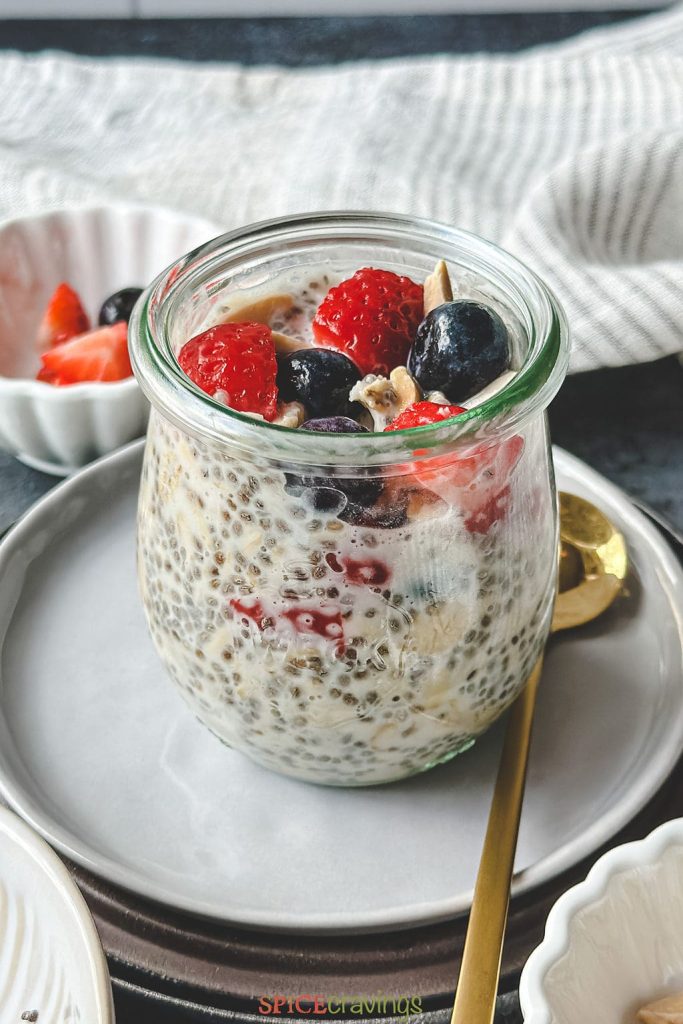
There is a particular kind of morning person I have always admired and never been — the kind who wakes up with enough time, energy, and motivation to make a proper breakfast before the day begins. Most mornings, I want something good in as little time as possible, and I want it to be genuinely nourishing rather than an afterthought.
Overnight oats solved this for me. And they have been solving it for a great many people, which explains their enduring popularity in health and lifestyle conversations.
The concept is disarmingly simple: combine oats with liquid and flavourings in the evening, refrigerate overnight, and wake up to a breakfast that is ready to eat, deeply creamy, and entirely customisable. There is no cooking involved. There is no morning preparation beyond opening the refrigerator and adding toppings. And the result — when the ratio is right and the oats have had time to absorb the liquid properly — is a breakfast with a texture that surprises most people the first time they try it.
This recipe covers the foundational method in detail, followed by five complete topping combinations that transform the same base recipe into five genuinely different breakfast experiences.
Understanding the Ratio
The ratio of oats to liquid is the single most important variable in overnight oats. Too much liquid produces a soupy, thin result that lacks the satisfying, almost pudding-like texture that makes overnight oats worthwhile. Too little liquid, and the oats remain dense and overly thick.
The ideal starting ratio is 1:1 — one part rolled oats to one part liquid. This produces a thick, creamy result that firms up overnight. Adjust to your preference: add a splash more liquid in the morning if you prefer a thinner consistency, or stir in a little extra oat milk at serving time.
Chia seeds are a non-optional addition in this recipe. They absorb liquid and expand overnight, creating a natural thickening effect that contributes to the pudding-like texture. They also add omega-3 fatty acids, fibre, and a meaningful amount of plant-based protein. Two tablespoons per serving is the right amount.
The Base Recipe (Serves 1)
Ingredients:
- 80g rolled oats (not instant — instant oats become mushy)
- 240ml unsweetened oat milk, almond milk, or coconut milk
- 2 tablespoons chia seeds
- 1 tablespoon maple syrup or agave nectar
- 1 teaspoon vanilla extract
- A small pinch of salt
Method:
Combine all ingredients in a jar or container with a lid. Stir well, ensuring the chia seeds are evenly distributed and not clumping. Seal the container and refrigerate for at least six hours, or overnight.
In the morning, stir the oats. They should have absorbed all the liquid and become thick and creamy. If the texture is too thick, add a small splash of plant milk and stir to reach your preferred consistency. Add your chosen toppings and eat immediately, or return to the refrigerator for up to two more days.
That is the entire recipe. Everything that follows is about making it interesting.
Five Topping Combinations
1. The Classic: Peanut Butter and Banana
This is the combination that converts overnight oat sceptics. The creaminess of natural peanut butter against the cool oats, the sweetness of ripe banana, the crunch of roasted peanuts — it is a combination that has become a morning ritual for a reason.
Add to your base: one tablespoon of natural peanut butter, swirled into the oats before refrigerating. In the morning, top with one sliced ripe banana, an extra drizzle of peanut butter, a small handful of roasted peanuts, and a drizzle of maple syrup.
2. The Tropical: Mango, Coconut, and Lime
Use full-fat coconut milk as the liquid for this version. In the morning, top with diced fresh or frozen-and-thawed mango, a tablespoon of toasted desiccated coconut, the zest and juice of half a lime, and a small handful of macadamia nuts if available. This combination transports the morning somewhere considerably warmer than wherever you are.
3. The Berry Boost: Mixed Berries and Lemon
Stir the zest of one lemon and a tablespoon of lemon juice into the base recipe before refrigerating. In the morning, top with a generous handful of mixed fresh or defrosted berries — blueberries, raspberries, and strawberries all work. Add a tablespoon of almond butter for richness and a teaspoon of bee-free honey or maple syrup. Scatter toasted flaked almonds over the top.
The lemon in the base gives the oats a subtle brightness that makes the berries taste more vivid.
4. The Warming Spice: Cinnamon, Apple, and Walnut
Add one teaspoon of ground cinnamon and a tablespoon of almond butter to the base recipe before refrigerating. Grate a small amount of apple into the oats as well — it softens slightly overnight and adds natural sweetness. In the morning, top with thin slices of fresh apple, a tablespoon of roughly chopped walnuts, an extra pinch of cinnamon, and a drizzle of maple syrup. This combination tastes like autumn regardless of the season.
5. The Chocolate Indulgence: Dark Chocolate and Cherry
Stir one tablespoon of good-quality cocoa powder and an extra teaspoon of maple syrup into the base recipe before refrigerating. In the morning, top with a handful of thawed frozen cherries (or fresh when in season), a small handful of vegan dark chocolate chips, a tablespoon of almond butter, and a dusting of cocoa powder. This is dessert-for-breakfast territory, and it is magnificent.
Batch Preparation for the Week
One of the greatest practical advantages of overnight oats is how well they scale for meal preparation. On Sunday evening, prepare five jars — one for each morning of the week. Use the same base recipe for all of them, but vary the add-ins and toppings to ensure each morning feels different.
The base oats will keep in the refrigerator for up to four days, so Monday through Thursday are comfortably covered. Make Friday’s jar on Thursday evening.
Store toppings such as fresh fruit and nuts separately and add them in the morning — they maintain their texture better this way and prevent the nuts from softening and the fruit from releasing excess moisture into the oats overnight.
Why Oats Are an Exceptional Breakfast Choice
Oats are one of the most nutritionally well-researched breakfast foods available. Their primary claim to nutritional distinction is beta-glucan — a soluble fibre that has been consistently shown in clinical research to reduce LDL cholesterol levels, slow the absorption of glucose after meals (resulting in more stable blood sugar), and support the growth of beneficial gut bacteria.
A single serving of overnight oats provides approximately four grams of beta-glucan, along with meaningful amounts of manganese, phosphorus, magnesium, and B vitamins. The chia seeds add omega-3 fatty acids and additional fibre. Plant milk fortified with calcium and vitamin D contributes nutrients typically associated with dairy.
This is a breakfast that functions as medicine without requiring any compromise on flavour or enjoyment.
Common Questions
Can I use instant oats? Technically yes, but the texture will be significantly less satisfying. Instant oats are pre-cooked and ground more finely, which means they absorb liquid almost immediately and become mushy. Rolled oats, which are simply steamed and flattened, maintain their structure overnight and produce the best texture.
Can I warm them up? Yes. Transfer to a saucepan with a small additional splash of plant milk and heat over low heat, stirring, for two to three minutes. They become warm and porridge-like. Some people prefer them this way in colder months.
Are they filling? Genuinely yes. The combination of slow-digesting oats, satiating chia seeds, and the fat from nuts or nut butter produces a breakfast that provides sustained energy for three to four hours in most people.
Final Thoughts
The best breakfast is one you actually eat. And the best way to ensure you eat a good breakfast on a busy morning is to have made it the night before. Overnight oats achieve this with minimal effort and maximum consistency.
Make a jar tonight. See how you feel about mornings by the end of the week.
Discover more plant-based breakfast ideas in our Website.