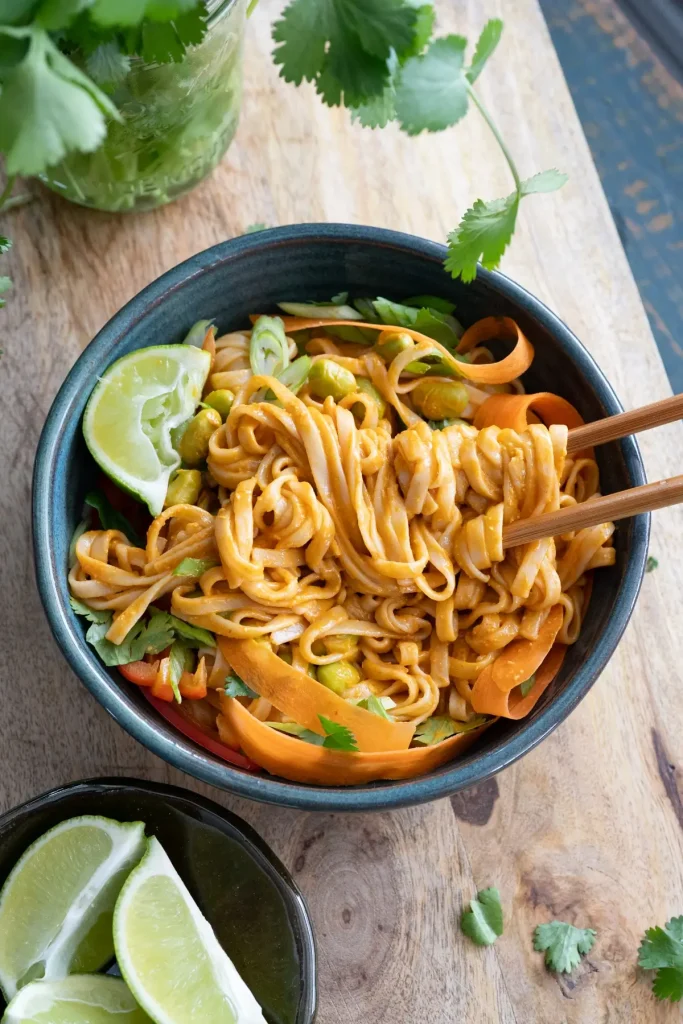
Some recipes exist to remind you that eating well does not have to be complicated. These Thai peanut noodles are perhaps the best example I know of that truth. They come together in under twenty minutes, require minimal equipment, and produce a bowl of food so rich, so balanced, and so quietly addictive that I have made them more times than I can reasonably count.
The peanut sauce is the centrepiece. It is bold without being heavy, sweet without being cloying, and carries just enough heat to keep you reaching for the next mouthful. Tossed through rice noodles and piled with crisp, fresh vegetables, it is the kind of dish that proves vegan food at its best is not a substitute for anything — it is simply excellent cooking in its own right.
This recipe is also almost infinitely adaptable. Whatever vegetables you have in your refrigerator — bell peppers, broccoli, edamame, cucumber, shredded carrot — they all belong here. The sauce is the constant; everything else is a variable.
The Anatomy of a Great Peanut Sauce
A great peanut sauce has five elements in balance: fat, salt, acid, sweetness, and heat. Peanut butter provides the fat and, together with soy sauce, the salt. Fresh lime juice delivers the acid. Maple syrup or coconut sugar brings the sweetness. Fresh chilli or chilli flakes provide the heat. Garlic and ginger thread through the whole thing, giving it depth and fragrance.
The ratio matters, but so does your palate — and that is why tasting as you go is not optional here, it is the recipe. Start with the proportions below, then adjust. A touch more lime if it needs brightness. A little more soy if it feels flat. An extra teaspoon of chilli if you want more fire. The sauce should taste almost too intense on its own, because once tossed through noodles and vegetables, it mellows significantly.
One more thing: use warm water to thin the sauce rather than cold. Warm water blends more easily into the peanut butter and prevents the sauce from seizing up.
Ingredients (Serves 4)
For the peanut sauce:
- 5 tablespoons natural peanut butter (smooth or crunchy)
- 3 tablespoons soy sauce or tamari
- 2 tablespoons fresh lime juice
- 1½ tablespoons maple syrup or coconut sugar
- 1 tablespoon rice vinegar
- 2 teaspoons sesame oil
- 3 garlic cloves, finely minced or grated
- 1 tablespoon fresh ginger, grated
- 1 to 2 teaspoons chilli flakes or sambal oelek (to taste)
- 4 to 6 tablespoons warm water (to loosen)
For the noodles and vegetables:
- 300g rice noodles (flat or vermicelli)
- 1 red bell pepper, thinly sliced
- 2 medium carrots, julienned or grated
- 1 cucumber, halved and thinly sliced
- 150g edamame beans (shelled, thawed if frozen)
- 4 spring onions, thinly sliced
- A large handful of fresh coriander
- A large handful of fresh mint
- 2 tablespoons sesame seeds, toasted
Optional toppings:
- Crushed roasted peanuts
- Extra lime wedges
- Crispy tofu or tempeh
- Thinly sliced red chilli
Method
Step 1: Make the Peanut Sauce
Combine the peanut butter, soy sauce, lime juice, maple syrup, rice vinegar, sesame oil, garlic, ginger, and chilli flakes in a medium bowl. Whisk together until smooth — it will look thick and slightly seized at first, but keep whisking. Add warm water, one tablespoon at a time, until you reach a pourable, coating consistency. Taste and adjust any element you feel is out of balance. Set aside.
Step 2: Cook the Noodles
Cook the rice noodles according to the packet instructions — most flat rice noodles require soaking in boiling water for 5 to 8 minutes rather than active boiling. Once tender, drain and rinse under cold water to stop the cooking and prevent sticking. If the noodles are very long, you can snip them roughly with kitchen scissors for easier tossing.
Step 3: Prepare the Vegetables
While the noodles soak, prepare all your vegetables. This is a raw-vegetable dish, so everything is sliced or grated for maximum freshness. The crunch of the carrot and bell pepper against the tender noodles and creamy sauce is part of what makes this dish so appealing.
Step 4: Combine
Place the drained noodles in a large bowl. Pour over most of the peanut sauce and toss well to coat every strand. Add the carrots, bell pepper, edamame, spring onions, coriander, and mint. Toss again gently, adding more sauce if needed. The noodles absorb the sauce quickly, so be generous.
Step 5: Serve
Divide between bowls and garnish with toasted sesame seeds, crushed peanuts, fresh lime wedges, and any additional toppings. Serve immediately, or refrigerate and serve cold as a noodle salad — it works beautifully both ways.
Making it a Full Meal: Adding Protein
The noodles as described are a satisfying meal for most people, but if you want to add more protein, crispy tofu is the natural companion.
To make crispy tofu: press a block of firm tofu between clean tea towels for at least 20 minutes to remove excess moisture. Cut into cubes, toss in a little soy sauce and cornstarch, and pan-fry in a tablespoon of neutral oil over high heat until golden and crisp on all sides. Add directly to the bowl.
Tempeh, marinated and pan-fried, is another excellent option. Its firmer, slightly nutty character pairs especially well with the intensity of the peanut sauce.
Health Benefits Worth Noting
Despite tasting like an indulgence, this dish is nutritionally well-rounded. Natural peanut butter provides protein, healthy monounsaturated fats, vitamin E, and magnesium. The raw vegetables contribute a range of vitamins, antioxidants, and dietary fibre. Fresh herbs — particularly coriander — provide meaningful amounts of vitamin K and trace minerals.
Rice noodles are naturally gluten-free and easy to digest, making this a dish that is accessible to those with gluten sensitivities. Use tamari instead of standard soy sauce to ensure the dish is fully gluten-free.
The sesame oil, beyond flavour, provides lignans and healthy polyunsaturated fats. It is one of those ingredients that earns its place nutritionally as well as flavourwise.
Storage
The peanut sauce can be made several days in advance and stored in a sealed jar in the refrigerator, where it will keep for up to a week. The assembled noodles are best eaten on the day they are made, as the noodles continue to absorb the sauce and can become clumped if stored overnight. If making ahead, store the sauce, noodles, and vegetables separately and combine just before serving.
A Recipe for All Occasions
What I appreciate most about this recipe is that it requires no special occasion. It belongs equally at a dinner party — served in a large bowl in the centre of the table for people to help themselves — and on a Tuesday evening when you open the refrigerator, see a wilting bell pepper and some leftover noodles, and decide something good can still come from what is there.
That versatility, more than anything else, is what makes this a staple recipe. It adapts to you, to your kitchen, and to whatever happens to be in your vegetable drawer. And it always tastes like someone tried.
Discover more quick and delicious plant-based meals in our Website