
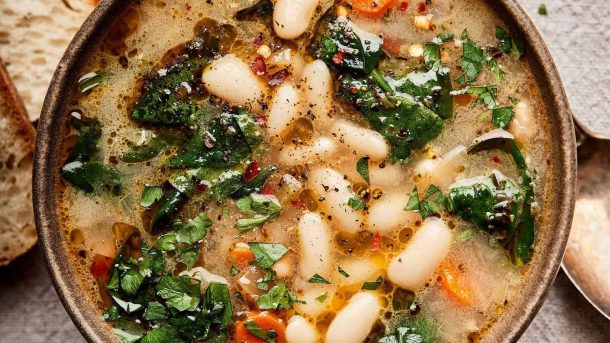
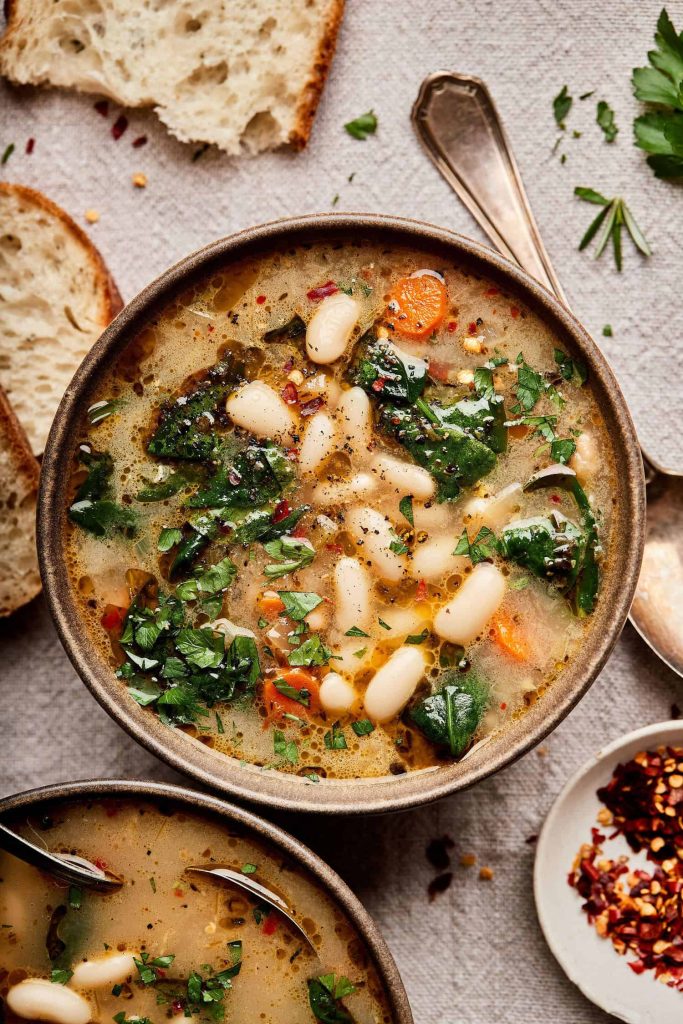
There are recipes that belong to a season. And then there are recipes that belong to a feeling — the particular warmth of a kitchen on a cold evening, the smell of garlic and rosemary in olive oil, the quiet satisfaction of a bowl of soup that is somehow exactly what you needed without knowing you needed it. This Tuscan white bean and kale soup is the second kind.
The Italian Tradition Behind This Recipe
Ribollita — which translates roughly as “reboiled” — is the Tuscan peasant soup that forms the ancestral basis of this recipe. Traditionally made from leftover minestrone reboiled the following day with stale bread stirred through, it is the original waste-not cuisine: humble, thrifty, and unassumingly extraordinary.
This version draws from ribollita’s flavour architecture without its complexity or time investment. It borrows the white beans, the cavolo nero, the aromatics, and the slow-simmer instinct from the original and produces a soup that is ready in under forty minutes.
The bread is still welcome. It is encouraged.
Why Cannellini Beans Are the Right Choice
White beans — and specifically cannellini beans — have a quality that most other beans lack: they break down beautifully under low heat, releasing starch into the surrounding liquid that thickens the soup naturally without any added cream or flour. Pressing a small portion of the beans before adding them to the pot accelerates this process, producing a broth that is rich and almost creamy while remaining entirely whole-food.
Butter beans are an excellent alternative — their larger, creamier texture creates a slightly more indulgent result. Great Northern beans work well too. Avoid chickpeas in this recipe — their firmer texture and more assertive flavour disrupts the gentle, creamy balance the soup depends on.
Ingredients (Serves 6)
- 3 cans (1.2kg) cannellini beans, drained (reserve the liquid from one can)
- 200g cavolo nero (Tuscan kale) or regular curly kale, ribs removed, roughly chopped
- 1 can (400g) chopped tomatoes
- 1.2 litres good-quality vegetable stock
- 1 large onion, finely diced
- 6 garlic cloves, thinly sliced (not minced — sliced garlic behaves differently in oil)
- 3 stalks celery, diced
- 2 medium carrots, diced
- 4 tablespoons good-quality extra-virgin olive oil, plus more to serve
- 2 sprigs fresh rosemary
- 3 sprigs fresh thyme
- 1 bay leaf
- 1 Parmesan rind (if not keeping fully vegan — adds extraordinary depth) or 3 tablespoons nutritional yeast
- ½ teaspoon chilli flakes
- 1 tablespoon white wine vinegar or lemon juice (to brighten at the end)
- Salt and black pepper
To serve:
- Thick-cut crusty bread or sourdough, toasted
- Additional extra-virgin olive oil
- Nutritional yeast or vegan Parmesan
- Fresh flat-leaf parsley
- Chilli flakes
Method
Step 1: Build the Soffritto
In a large, heavy-bottomed pot, heat the olive oil over medium-low heat. Add the onion, celery, and carrots with a generous pinch of salt. This is the soffritto — the Italian aromatic base that underpins the flavour of the entire soup. Cook slowly for 12 to 15 minutes, stirring occasionally, until the vegetables are completely soft, translucent, and beginning to turn golden. Do not rush this. The long, slow cooking sweetens the onion and concentrates the base.
Add the sliced garlic, rosemary, thyme, chilli flakes, and bay leaf. Cook for two more minutes until the garlic is fragrant and just beginning to colour.
Step 2: Add the Tomatoes
Add the chopped tomatoes and stir well. Increase the heat slightly and cook for five minutes, allowing the tomatoes to reduce and deepen in colour. This step removes the raw tomato edge and concentrates the umami.
Step 3: Prepare and Add the Beans
Drain two cans of beans and add them to the pot. With the back of a wooden spoon or a potato masher, press roughly one-third of the beans directly in the pot — this releases their starch and begins to build the creamy consistency. Drain the third can and add the beans whole. Pour the reserved bean liquid from one can into the soup — it adds body and flavour.
Add the vegetable stock and the Parmesan rind or nutritional yeast. Stir well.
Step 4: Simmer
Bring the soup to a boil, then reduce to a gentle simmer. Cook uncovered for 20 minutes, stirring occasionally. The broth will thicken as the pressed beans break down further and the starch releases. If the soup becomes thicker than you prefer, add a splash of additional stock or water.
Remove the Parmesan rind (if using), the rosemary and thyme sprigs, and the bay leaf.
Step 5: Add the Kale
Add the chopped kale in large handfuls, stirring after each addition. It will reduce dramatically in volume within seconds of hitting the hot broth. Simmer for five more minutes until the kale is completely wilted and tender but still a deep, vivid green.
Step 6: Finish and Serve
Add the white wine vinegar or lemon juice and stir. This final acidity is important — it brightens every flavour in the soup and lifts it from comforting to exceptional. Taste and season generously with salt and black pepper.
Ladle into deep bowls. Add a generous drizzle of good extra-virgin olive oil over the surface of each bowl — this is not optional. It is the Italian way, and it matters enormously to the final flavour. Scatter fresh parsley, chilli flakes, and nutritional yeast or vegan Parmesan. Serve with thick slices of toasted bread for dipping.
The Day-Two Phenomenon
This soup is excellent on the day it is made. It is transcendent on the second day. As it sits overnight, the beans continue to break down, the kale softens further, and the flavours from the rosemary and thyme permeate the entire pot in a way that active cooking cannot replicate. This is the ribollita principle: the best version of this soup is always the reboiled one.
Make a large batch intentionally. Reheat it the next day with a splash of water and eat it again. You will be glad you did.
Nutrition: Why This Soup Deserves Its Superfood Status
Cannellini beans are one of the most impressive nutritional packages in plant-based cooking: a single cup provides 17 grams of protein, 11 grams of dietary fibre, and very high levels of folate, iron, magnesium, and potassium. They are genuinely filling — the combination of protein and fibre produces sustained satiety that processed foods cannot match.
Cavolo nero (Tuscan kale) is arguably the most nutrient-dense leafy green available. It provides exceptional amounts of vitamins K, A, and C, along with calcium, iron, and glucosinolates — compounds with demonstrated protective effects against cellular damage. It also contains lutein and zeaxanthin, carotenoids that support long-term eye health.
Olive oil — used generously in both the cooking and serving of this soup — contributes oleocanthal, a compound with anti-inflammatory properties comparable in mechanism to ibuprofen, according to some research. This is the reason Mediterranean diets consistently show positive associations with cardiovascular health.
This bowl is medicine without tasting like it.
Storage and Freezing
Refrigerate in sealed containers for up to five days. The soup thickens considerably on cooling and may need water or stock when reheating — add gradually until the consistency returns to what you prefer.
To freeze: allow to cool completely. Freeze in portions for up to four months. Thaw overnight in the refrigerator and reheat gently, adding liquid as needed.
A Soup Worth Making in Volume
One of the small wisdoms of Italian home cooking is the batch-cook instinct — making more than you need today because you know tomorrow’s version will be better. This soup embodies that instinct entirely. Make a full pot. Share it if you can. Keep the rest.
Find more one-pot plant-based soups and vegan dinner ideas in our Website.