
Sometimes a trend arrives so quietly that you almost miss it. There were no celebrity endorsements, no supermarket launches, no food media campaigns. Just thousands of people, independently and almost simultaneously, typing the same question into their search bars: “how do I make vegan cottage cheese?”
According to Google Trends analysis, vegan cottage cheese became one of the fastest-growing food search terms of 2025, continuing strongly into 2026. The interest was not driven by a single viral post or a notable product launch. It was driven by something more interesting: a genuine curiosity, widely shared, about whether the mild, creamy, high-protein versatility of cottage cheese could be replicated without dairy.
The answer, as this recipe demonstrates in three different ways, is a convincing yes.
Why Cottage Cheese Has Become the Ingredient of the Moment
Traditional cottage cheese experienced a significant cultural renaissance in 2024 and 2025, driven largely by the high-protein eating trend and the cottage cheese pancake and cottage cheese bowl content that flooded TikTok and Pinterest. For dairy eaters, it offered a high-protein, relatively low-fat food with mild flavour and remarkable versatility — usable in sweet and savoury contexts alike.
For plant-based eaters watching this trend from the sidelines, the question was natural: can I have this too?
Vegan cottage cheese is not a new idea — it has existed in whole-food plant-based cooking for years. But the sudden mainstream interest brought new creativity to the concept, and the versions that emerged from that creative pressure are genuinely excellent.
Three Versions of Vegan Cottage Cheese
This recipe presents three distinct approaches, each with different base ingredients, different textures, and different nutritional profiles. Choose based on what you have available, what you plan to use it for, and your own preferences.
Version 1: Tofu Cottage Cheese (Best for High Protein, Savory Uses)
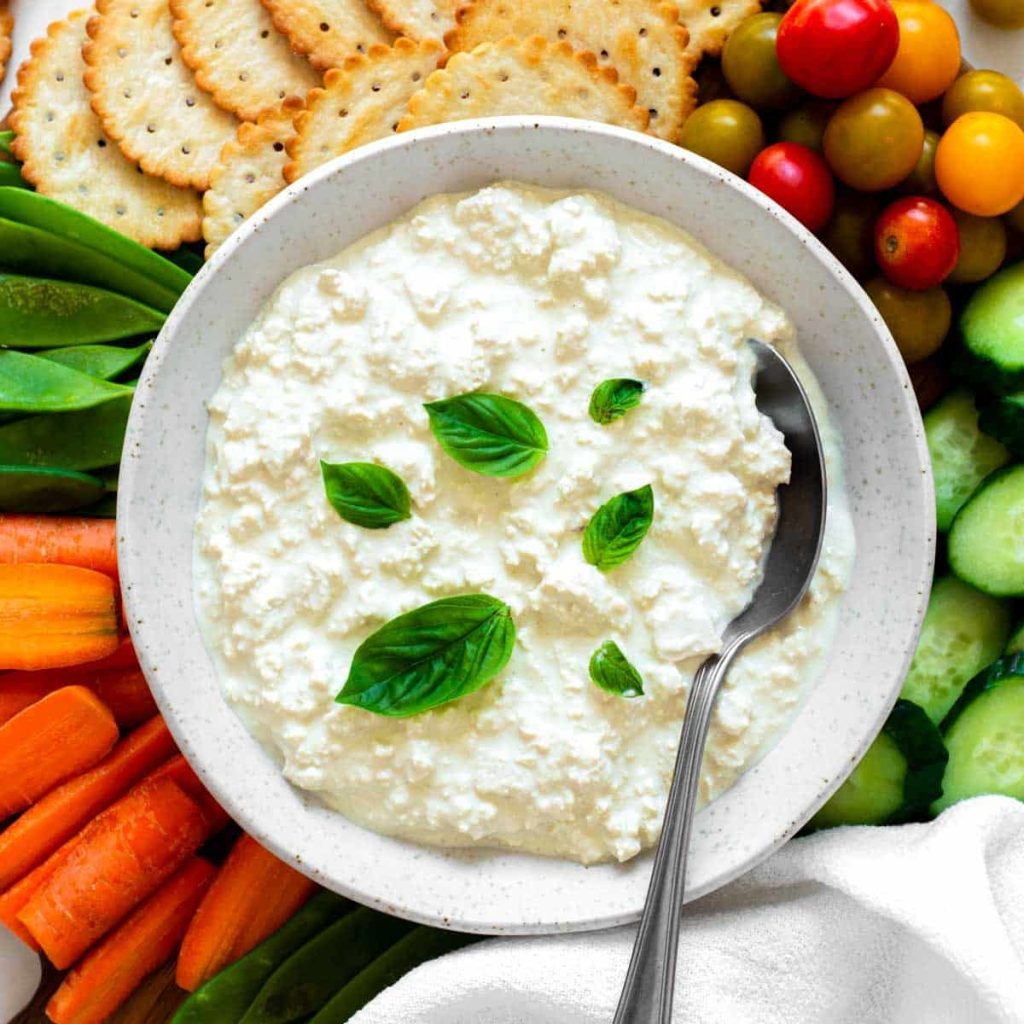
This is the most nutritionally impressive version and the most convincing in terms of texture. Crumbled firm tofu has a natural lumpiness that closely mimics the curds of dairy cottage cheese.
Ingredients:
- 400g firm tofu, drained (not pressed — you want it slightly moist)
- 200g silken tofu
- 2 tablespoons lemon juice
- 1 tablespoon apple cider vinegar
- 1 tablespoon nutritional yeast
- 1 teaspoon onion powder
- ½ teaspoon garlic powder
- ½ teaspoon salt, or more to taste
- 2 tablespoons unsweetened oat milk or plant milk (to adjust consistency)
- Fresh chives, finely chopped (optional)
Method: Blend the silken tofu with the lemon juice, apple cider vinegar, nutritional yeast, onion powder, garlic powder, and salt until completely smooth — this forms the creamy base.
Crumble the firm tofu into the blended base using your hands, breaking it into irregular pieces of varying sizes — some small, some slightly larger — that mimic the curd structure of dairy cottage cheese. Do not blend again; fold gently with a spatula. Add the plant milk to reach your desired consistency. Fold in the chives if using. Taste and adjust salt and acid.
Refrigerate for at least one hour before serving — the flavours develop considerably, and the texture sets in a way that improves the overall result.
Protein per serving (½ cup): approximately 12–14 grams
Version 2: Cashew Cottage Cheese (Best for Creamy, Sweet Uses)
This version is richer, creamier, and more indulgent. The cashew base produces a texture closer to ricotta than cottage cheese, but it works beautifully in sweet contexts — on toast with fruit, in parfaits, in baking.
Ingredients:
- 200g raw cashews, soaked for at least four hours, drained
- 2 tablespoons lemon juice
- 1 tablespoon apple cider vinegar
- 1 tablespoon maple syrup (for sweet uses) or omit for savoury
- ½ teaspoon salt
- 60–80ml water
- 100g silken tofu (optional, to add protein and lighten the texture)
Method: Blend all ingredients except the water until almost smooth. Add water, one tablespoon at a time, until you reach a thick, scoopable consistency. For a cottage-cheese-style texture, pulse rather than blend fully — leaving some slight texture.
Refrigerate for one hour before using. This version will keep for up to five days in a sealed jar.
Uses: Toast with sliced peach and honey alternative, layered in parfaits with granola and berries, as a filling for blintzes, in cheesecake as a ricotta substitute.
Version 3: Almond Cottage Cheese (Best for Budget-Friendly, Everyday Use)
Blanched almonds, soaked and blended with a cultured element, produce a mild, slightly textured cottage cheese alternative that is more affordable than cashews and works well in most savoury applications.
Ingredients:
- 200g blanched almonds, soaked for 8 hours or overnight, drained
- 2 tablespoons lemon juice
- 1 tablespoon apple cider vinegar
- 1 tablespoon vegan plain yoghurt (adds a cultured, tangy note)
- ½ teaspoon salt
- 1 teaspoon onion powder
- 80–100ml water
Method: Blend all ingredients, starting with 80ml of water. Blend until smooth but slightly grainy — almonds will never achieve the silkiness of cashews, and that slight texture works in favour of the cottage cheese illusion. Adjust salt and acid. Refrigerate for at least two hours before using.
10 Ways to Use Vegan Cottage Cheese
Once you have a jar in the refrigerator, here is how to use it:
- On toast: With sliced avocado and everything bagel seasoning for a savoury breakfast.
- In a bowl: With fresh berries, a drizzle of maple syrup, and granola for a high-protein sweet breakfast.
- In pancakes: Fold into pancake batter for extra moisture and protein — the mildness works perfectly.
- As a dip: Season the tofu version with fresh herbs, garlic, and lemon zest for a vegetable dip.
- Stuffed pasta filling: Use in place of ricotta in stuffed shells or lasagne.
- In salad dressing: Blend with lemon juice, olive oil, and herbs for a creamy, protein-rich dressing.
- On baked potatoes: As a healthier alternative to sour cream or butter.
- In smoothies: A few tablespoons in a protein smoothie adds creaminess and protein without affecting flavour.
- With cucumber and dill: Sliced cucumber, fresh dill, and a squeeze of lemon — a simple, elegant snack.
- As a cheesecake base: The cashew version works beautifully as the filling for a no-bake vegan cheesecake.
The Nutritional Case for Vegan Cottage Cheese
Traditional dairy cottage cheese has long been celebrated for its high protein-to-calorie ratio. The tofu-based version holds up well in comparison. Per half-cup serving:
- Tofu cottage cheese: ~12–14g protein, ~100 calories, high iron and calcium
- Dairy cottage cheese: ~14g protein, ~110 calories
- Cashew cottage cheese: ~5g protein, ~180 calories (higher in healthy fats)
The tofu version also provides isoflavones — phytoestrogens with demonstrated benefits for bone health and cardiovascular health in research contexts — along with calcium (particularly if made with calcium-set tofu), iron, and all essential amino acids.
The cashew and almond versions are lower in protein but higher in heart-healthy monounsaturated fats and vitamin E.
Storage
All three versions keep in a sealed jar in the refrigerator for four to five days. They do not freeze well — the texture suffers on thawing. Make smaller batches more frequently for the freshest result.
Final Thoughts
The vegan cottage cheese trend is worth paying attention to — not because it is particularly glamorous, but because it solves a real practical problem for plant-based eaters: the need for a mild, creamy, high-protein food that works across contexts and occasions, that requires no cooking, and that keeps conveniently in the refrigerator for several days.
Make the tofu version first. Use it on toast tomorrow morning. See how quickly the jar empties.
Find more trending high-protein vegan recipes and plant-based kitchen staples in our Website.