
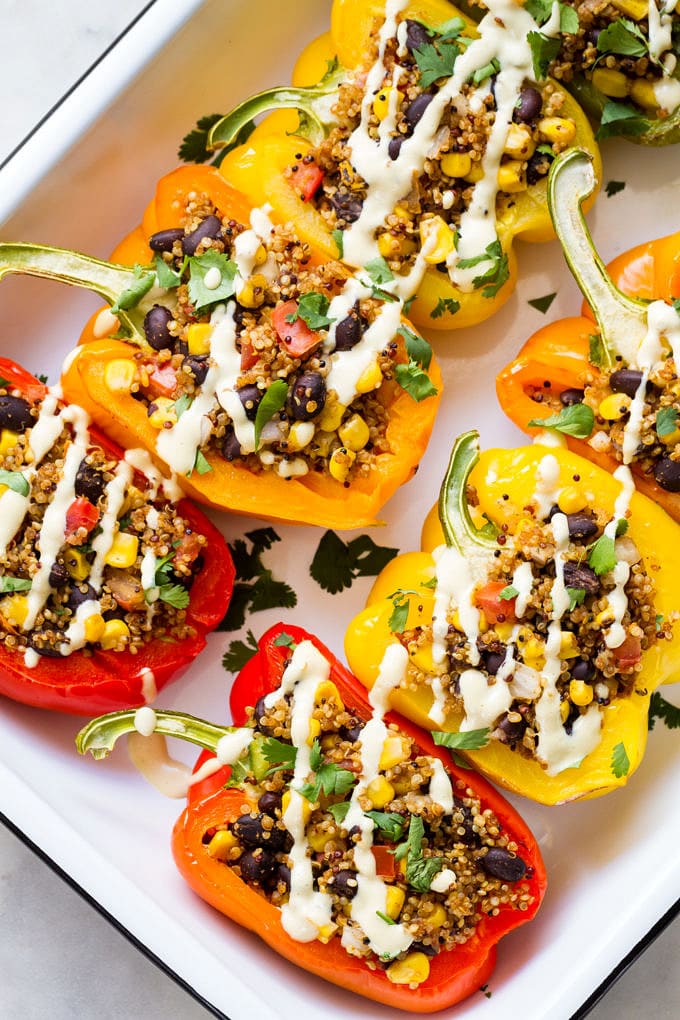
whole food plant-based dinner

Stuffed Bell Peppers with Quinoa and Black Beans: A Vibrant Vegan Dinner

There is something inherently appealing about a stuffed vegetable. It is a dish with visual confidence — whole, colourful, and presented with an honesty that says exactly what it is. A stuffed pepper brings the container and the meal together into a single, self-sufficient package, and that simplicity is part of its enduring charm.

These quinoa and black bean stuffed bell peppers are everything a weeknight dinner should be: uncomplicated to prepare, genuinely satisfying to eat, and versatile enough to accommodate whatever you have in the pantry. The filling is warm, spiced, and deeply flavoured. The peppers soften in the oven until they are tender and slightly caramelised. Together, they make a complete meal with very little cleanup required.

What I particularly like about this recipe is how well it scales. A single tray accommodates six large peppers, which is enough to feed a family or provide meal-prepped lunches through the week. The filling is also excellent on its own — served over rice, wrapped in a tortilla, or simply eaten from the pan with a spoon. It is one of those versatile base recipes that earns its place in any cook’s rotation.

Choosing Your Peppers

Bell peppers come in four colours at most supermarkets — green, yellow, orange, and red — and they are not interchangeable in terms of flavour. Green peppers are the least ripe and have a distinct bitterness that some find appealing and others find challenging. Red, orange, and yellow peppers are all sweeter — they have been allowed to ripen longer on the plant, converting their chlorophyll to carotenoids as they develop their colour and sweetness.

For this recipe, red and orange peppers are the most complementary to the filling’s warm spice profile. Their natural sweetness balances the cumin and chilli beautifully. Yellow peppers also work well. Green peppers are not ideal here — their bitterness can compete with rather than complement the filling.

Choose peppers that are firm, glossy, and have a flat bottom — they will sit more stably in the baking dish.

Ingredients (Serves 6)

For the filling:

  • 200g quinoa, rinsed
  • 2 cans (800g) black beans, drained and rinsed
  • 1 can (400g) chopped tomatoes
  • 1 can (200g) sweetcorn, drained
  • 1 medium onion, finely diced
  • 4 garlic cloves, minced
  • 1 jalapeño, finely diced (optional)
  • 2 teaspoons ground cumin
  • 1½ teaspoons smoked paprika
  • 1 teaspoon chilli powder
  • 1 teaspoon dried oregano
  • 2 tablespoons olive oil
  • Salt and pepper to taste
  • A large handful of fresh coriander, roughly chopped
  • Juice of 1 lime

For the peppers:

  • 6 large bell peppers (red, orange, or yellow)
  • 2 tablespoons olive oil
  • Salt and pepper

To serve:

  • Sliced avocado or guacamole
  • Vegan sour cream or cashew cream
  • Extra lime wedges and coriander
  • Hot sauce

Method

Step 1: Cook the Quinoa

Rinse the quinoa thoroughly in a fine-mesh sieve under cold running water — this removes the naturally occurring saponins on the surface that can taste bitter. Place in a saucepan with 400ml of water and a pinch of salt. Bring to a boil, reduce to a very low simmer, cover, and cook for 12 to 15 minutes until all the water has been absorbed and the quinoa is tender with small white tails visible. Remove from heat and leave covered for five minutes, then fluff with a fork.

Step 2: Prepare the Peppers

Preheat the oven to 200°C (180°C fan). Slice the tops off the peppers and remove the seeds and membranes from inside. If any peppers wobble, slice a very thin sliver from the bottom to create a stable base — be careful not to cut through to the hollow interior.

Brush the outside of the peppers lightly with olive oil, season with salt and pepper, and arrange upright in a baking dish. If the peppers lean against each other, that is perfectly fine — they will support each other during baking.

Pre-bake the empty pepper shells for 15 minutes. This head start ensures they will be fully tender by the time the filling is heated through — skipping this step often results in peppers that are still slightly firm when the filling is ready.

Step 3: Make the Filling

While the peppers pre-bake, heat olive oil in a large pan over medium heat. Add the onion and cook for 7 to 8 minutes until softened and golden. Add the garlic and jalapeño (if using) and cook for one more minute. Add the cumin, smoked paprika, chilli powder, and oregano. Stir for one minute to bloom the spices.

Add the chopped tomatoes, stir well, and simmer for 5 minutes. Add the black beans, sweetcorn, and cooked quinoa. Stir to combine and season generously with salt and pepper. Simmer for three to four minutes to allow the flavours to integrate. Remove from heat and stir in the fresh coriander and lime juice.

Step 4: Fill and Bake

Remove the pre-baked pepper shells from the oven. Spoon the filling generously into each pepper, packing it firmly and mounding it above the rim. Return to the oven and bake for a further 20 to 25 minutes, until the peppers are completely tender and beginning to char slightly at the edges.

Step 5: Serve

Allow to rest for five minutes. Serve with sliced avocado, a dollop of vegan sour cream or cashew cream, extra lime wedges, and fresh coriander.

Why Quinoa Is Worth Using Here

Quinoa has earned a somewhat polarising reputation — sometimes celebrated, sometimes mocked for its association with a certain style of wellness culture. Setting aside that baggage, it is simply a very good ingredient, and this is an ideal recipe to see why.

Quinoa is one of the rare plant foods that provides all nine essential amino acids in meaningful quantities, making it a complete protein source. It also cooks relatively quickly, has a pleasant, slightly nutty flavour, and absorbs surrounding seasonings beautifully. In this filling, it provides bulk and protein alongside the black beans, creating a genuinely satisfying and nutritionally well-rounded meal.

Each serving of two stuffed peppers provides approximately 20 grams of protein, 14 grams of fibre, and substantial amounts of vitamins A and C from the peppers themselves.

Make-Ahead and Storage

The filling can be made up to two days in advance and refrigerated in a sealed container. The pre-baked pepper shells can also be prepared a day ahead. When ready to eat, simply fill and bake as directed, adding five extra minutes of baking time if the filling is cold.

Leftover stuffed peppers store well in the refrigerator for up to three days. Reheat in a 180°C oven for 15 minutes, or microwave individual peppers for two to three minutes.

The filling freezes well — freeze in portions for up to three months and thaw overnight before using. Fully assembled and baked peppers do not freeze as successfully, as the pepper can become very soft on thawing.

Variations

Mediterranean style: Replace the cumin and chilli with dried oregano and basil. Use white beans instead of black beans, add chopped sun-dried tomatoes and kalamata olives to the filling, and finish with pine nuts and fresh basil.

Indian-spiced: Use brown rice instead of quinoa, swap black beans for chickpeas, and season the filling with garam masala, turmeric, and ginger. Serve with a drizzle of mango chutney.

Mushroom and lentil: Replace the quinoa and beans with cooked Puy lentils and finely diced sautéed mushrooms for a heartier, earthier filling.

Final Thoughts

Stuffed peppers are one of those reliable recipes that asks very little of you in terms of technique but rewards you consistently. They look impressive on the table. They travel well in lunch containers. They reheat beautifully. And they are the kind of dish that adapts gracefully to whatever your pantry offers on a given evening.

Make them once, and they will become part of your regular rotation. That is the best thing I can say about any recipe.


Find more nourishing plant-based recipes in our Website.
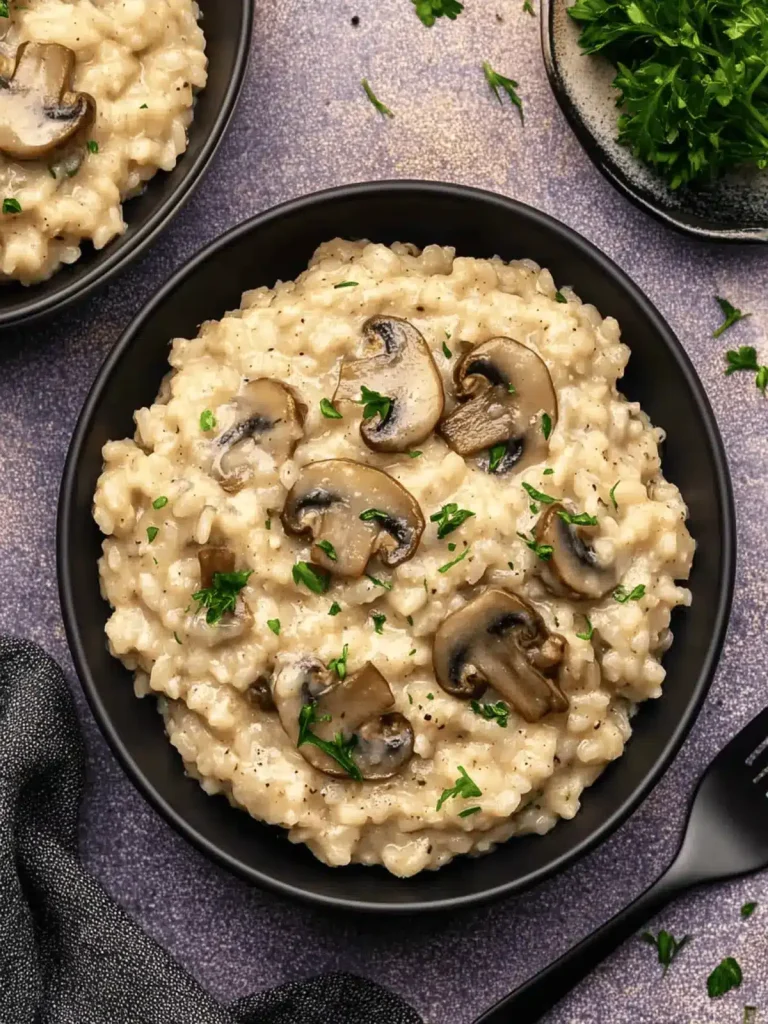
The Secret to a Perfect Vegan Mushroom Risotto (That Nobody Will Believe Is Dairy-Free)

Risotto has a reputation for being difficult. Chefs on cooking competitions treat it with an almost reverent caution, and home cooks often sidestep it entirely, assuming it requires either technical skill they do not have or constant, anxious supervision. I want to challenge both of those assumptions — because risotto, at its core, is simply a technique of patience and attention, and once you understand what you are trying to achieve, it becomes one of the most enjoyable things to cook.

This vegan mushroom risotto is rich, deeply savoury, and so satisfying that it has become the dish I make when I want to genuinely impress someone. The secret is layering umami — through a combination of dried porcini mushrooms, fresh mixed mushrooms, good vegetable stock, and a generous finish of nutritional yeast that gives the dish that characteristic savoury depth typically associated with Parmesan.

You do not need dairy to make a great risotto. You need good stock, the right rice, and enough time to stir.

A Note on the Rice

Risotto rice is not interchangeable with regular long-grain rice. The dish depends on the starch released from short-grain varieties — specifically Arborio, Carnaroli, or Vialone Nano — to create that creamy, flowing consistency. Arborio is the most widely available and works beautifully. Do not rinse the rice before cooking; the surface starch is precisely what you want to preserve.

Carnaroli, if you can find it, is worth seeking out. It is slightly firmer, releases starch more gradually, and gives you a longer window between perfect risotto and overcooked. It is the variety most used by Italian chefs for good reason.

The Role of Dried Mushrooms

Dried porcini mushrooms are one of the most underrated ingredients in a home kitchen. When soaked in hot water, they release a deeply flavoured, almost meaty liquid that works as a ready-made umami base. In this recipe, that soaking liquid is added directly to the stock, infusing every ladle with concentrated mushroom flavour.

Do not skip this ingredient. It is inexpensive, keeps for months in a sealed jar, and elevates the final dish in a way that fresh mushrooms alone simply cannot replicate.

Ingredients (Serves 4)

  • 300g Arborio or Carnaroli rice
  • 500g mixed fresh mushrooms (chestnut, portobello, shiitake — any combination)
  • 25g dried porcini mushrooms
  • 1.2 litres good-quality vegetable stock, kept warm
  • 1 medium onion, very finely diced
  • 4 garlic cloves, minced
  • 150ml dry white wine (or an additional 150ml stock)
  • 3 tablespoons olive oil
  • 2 tablespoons vegan butter
  • 4 tablespoons nutritional yeast
  • 1 tablespoon fresh thyme leaves (or 1 teaspoon dried)
  • 1 tablespoon soy sauce
  • Salt and black pepper to taste
  • Fresh flat-leaf parsley, to serve
  • Truffle oil, to serve (optional but excellent)

Method

Step 1: Rehydrate the Porcini

Place the dried porcini mushrooms in a heatproof bowl and pour over 300ml of boiling water. Leave to soak for at least 20 minutes. Once soaked, remove the mushrooms, squeezing out any excess liquid, and chop them roughly. Pour the soaking liquid through a fine sieve or muslin cloth into your warm vegetable stock — this becomes the flavoured base for your risotto. Discard any grit left behind.

Step 2: Cook the Fresh Mushrooms

Heat one tablespoon of olive oil in a wide pan over high heat. Add the fresh mushrooms and cook without stirring for two to three minutes — you want them to develop colour rather than steam. Season with salt and pepper, add the soy sauce, and toss briefly. Remove from the pan and set aside. High heat and patience are the keys to golden rather than grey mushrooms.

Step 3: Begin the Risotto

In a wide, heavy-bottomed pan, heat the remaining two tablespoons of olive oil over medium heat. Add the onion and a pinch of salt. Cook gently for 8 to 10 minutes until soft and translucent. Add the garlic and thyme and cook for one more minute. Add the rehydrated porcini mushrooms and stir to combine.

Step 4: Toast the Rice

Add the rice to the pan and stir constantly for two minutes until each grain is well coated in the oil and begins to turn slightly translucent at the edges. This toasting step is important — it helps the rice maintain structure through the long cooking process.

Step 5: Add the Wine

Pour in the white wine and stir constantly until it has been almost entirely absorbed. The alcohol will evaporate quickly, leaving behind a pleasant acidity that balances the richness of the final dish.

Step 6: Add the Stock, Ladle by Ladle

This is the step that defines risotto. Add the warm stock one ladleful at a time, stirring frequently and waiting until each addition is almost completely absorbed before adding the next. This gradual process coaxes the starch from the rice, building the creamy consistency that characterises a great risotto. The entire process takes around 18 to 20 minutes over medium heat. Taste the rice as you go — it should be tender with just a slight bite at the centre when done.

Step 7: Finish and Serve

Remove the pan from heat. Stir in the vegan butter and nutritional yeast vigorously — this technique, called mantecatura in Italian cooking, is what gives risotto its final glossy, creamy texture. Fold in the reserved sautéed mushrooms. Taste and season generously with salt and pepper.

Serve immediately in warm bowls, finished with fresh parsley and a small drizzle of truffle oil if using.

Nutritional Highlights

Mushrooms are among the most nutritionally interesting ingredients in plant-based cooking. They are one of the few non-animal sources of vitamin D, particularly when exposed to sunlight — and shiitake mushrooms are a valuable source of B vitamins and zinc. Combined with the protein from nutritional yeast and the complex carbohydrates from the rice, this dish offers a balanced and genuinely nourishing meal.

Nutritional yeast deserves particular mention. Beyond its savoury, almost cheesy flavour, it is a complete protein and often fortified with vitamin B12 — a nutrient of particular importance for those following a fully plant-based diet. Two tablespoons provides a meaningful contribution to daily requirements.

Serving Suggestions

This risotto is complete as a standalone dish but pairs well with a simple green salad dressed with lemon and olive oil. A glass of the same dry white wine used in cooking is the natural accompaniment.

For a special occasion, shave thin slices of fresh black truffle over the top — it transforms the dish into something genuinely extraordinary. A small drizzle of good truffle oil achieves a similar effect at a fraction of the cost.

Make-Ahead Tips

Risotto is best served immediately, but if you are cooking for a dinner party and want to manage your time, you can cook the risotto to about 75 percent done — around 14 minutes of stock addition — and then spread it out on a baking tray to cool and halt the cooking. When ready to serve, reheat in the pan with an additional ladle or two of warm stock and finish as directed. This technique is widely used in restaurant kitchens and works extremely well.

Leftover risotto makes outstanding risotto cakes the following day. Form cold risotto into patties, coat lightly in breadcrumbs, and pan-fry in a little oil until golden on both sides. They are arguably even better than the original.

Final Thoughts

What this recipe ultimately asks of you is presence — a willingness to stand at the stove, stir, observe, and adjust. In an era of multitasking and distraction, there is something genuinely therapeutic about a dish that demands your full attention for twenty minutes. The risotto becomes better for your focus, and so, in some small way, do you.

Make it on a quiet evening when you have time to enjoy the process. It will reward you.


Explore more comforting plant-based recipes in our Website.