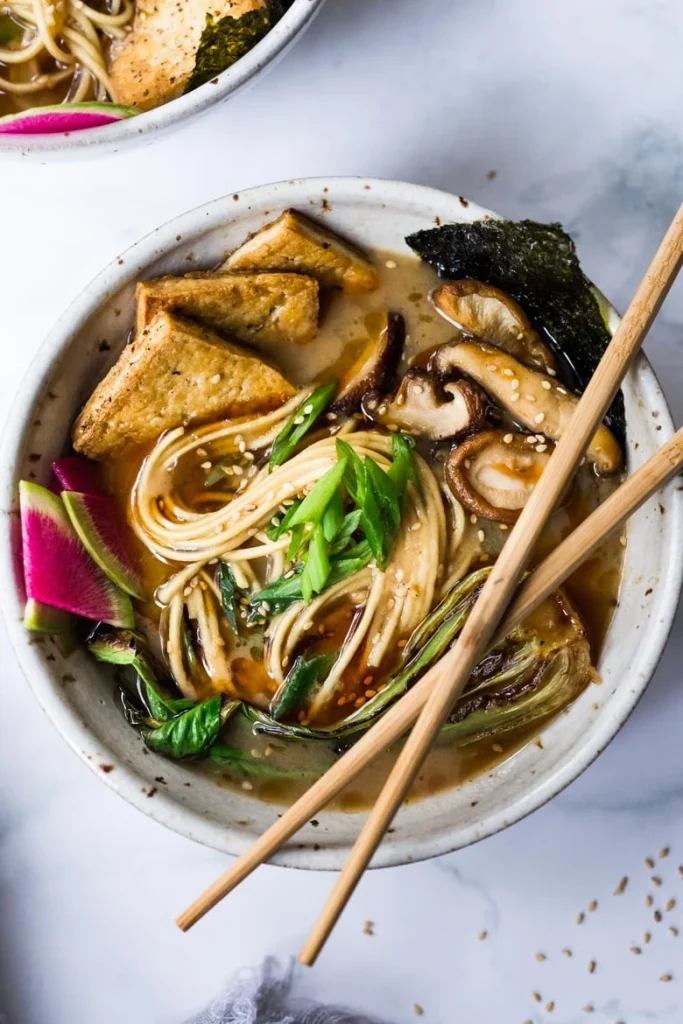
This version takes the best elements from every viral iteration and combines them into a single, reliable recipe that you can make in thirty minutes on a weeknight. The broth is deep and umami-rich without requiring hours of simmering. The tofu is crispy. The toppings are fresh. And the whole bowl comes together in a way that makes you understand, on the first bite, why this became a global phenomenon.
Why Vegan Ramen Is Trending on Every Platform Right Now
Ramen holds a unique cultural position: it is simultaneously street food and comfort food, simple and complex, deeply satisfying and surprisingly light. For years, plant-based ramen was considered an inferior alternative to its pork-broth original. That perception changed when food creators started demonstrating, with genuine results, that a well-built vegan broth — layered with miso, soy, sesame, and aromatics — could produce a bowl of comparable depth and considerably more versatility.
The TikTok ramen trend accelerated this shift. Creators began sharing fast, accessible versions with dramatic reveals — the broth ladled over noodles and toppings, steam rising, the crunch of a soft-boiled egg (or in vegan versions, marinated tofu) cutting through the frame. The visual language of ramen is perfect for short-form video, and the actual cooking technique is straightforward enough for a beginner.
It is a recipe built for the internet, and it deserves to be made in real kitchens too.
Understanding the Layers of a Great Vegan Ramen Broth
The broth is where everything begins and ends. Unlike traditional tonkotsu ramen, which derives its body and richness from hours of pork bone simmering, vegan ramen builds its depth from a different set of tools:
Miso paste is the foundation. White miso (shiro miso) is milder and sweeter; red miso (aka miso) is deeper and more assertive. A combination of both produces the most complex result. Miso is never boiled — it is stirred into the broth at the very end of cooking, preserving its living enzymes and delicate flavour compounds.
Soy sauce and tamari add saltiness and a baseline of umami that runs through the entire bowl.
Sesame paste or tahini contributes richness and a subtle nuttiness that approximates the body of a fat-based broth.
Dried kombu and shiitake mushrooms produce a concentrated dashi — the Japanese umami-rich stock that is the real engine of the broth’s depth. This requires only 20 minutes of cold infusion.
Ginger and garlic provide fragrance. Chilli oil finishes with heat.
When these elements work together, the broth is indistinguishable in satisfaction from a meat-based alternative.
Vegan Ramen Ingredients (Serves 4)
For the kombu-shiitake dashi:
- 1 litre cold water
- 10g dried kombu seaweed
- 15g dried shiitake mushrooms
The tare (seasoning sauce):
- 3 tablespoons white miso paste
- 2 tablespoons red miso paste
- 3 tablespoons soy sauce or tamari
- 1 tablespoon mirin
- 1 tablespoon sesame paste or tahini
- 1 teaspoon toasted sesame oil
- 1 tablespoon chilli oil or chilli paste (gochujang works beautifully)
For the broth:
- 1 litre vegetable stock
- The prepared kombu-shiitake dashi
- 5 garlic cloves, minced
- 1 tablespoon fresh ginger, grated
- 1 tablespoon neutral oil
The crispy tofu:
- 400g extra-firm tofu, pressed and cubed
- 2 tablespoons soy sauce
- 1 tablespoon cornstarch
- 1 tablespoon neutral oil
- 1 teaspoon sesame oil
For the noodles and toppings:
- 400g fresh or dried ramen noodles (or substitute udon, soba, or rice noodles for gluten-free)
- 200g baby bok choy, halved
- 150g corn kernels (tinned or fresh)
- 4 spring onions, thinly sliced
- 2 sheets nori, cut into strips
- 2 tablespoons toasted sesame seeds
- Chilli oil, to serve
- Bean sprouts (optional)
- Vegan butter (one small cube per bowl, for richness)
Method
Step 1: Make the Dashi (20 minutes, mostly hands-off)
Combine the kombu and dried shiitake mushrooms with one litre of cold water in a saucepan. Bring slowly to just below a simmer — small bubbles should begin to rise but not break the surface. Hold at this temperature for 15 minutes. Remove the kombu (it becomes slimy if overcooked). Allow the shiitake to continue infusing for five more minutes, then strain. Reserve the mushrooms — slice them and add as a topping. The resulting dashi will be a beautiful amber colour with a deep, savoury aroma.
Step 2: Make the Tare
Whisk together all tare ingredients in a small bowl until smooth. This concentrated seasoning paste is added to each bowl individually, which means each person can adjust the intensity of their broth to their preference.
Step 3: Cook the Crispy Tofu
Press the tofu thoroughly. Cube, then toss with soy sauce and leave for five minutes. Dust with cornstarch. Heat the neutral oil in a frying pan over high heat. Add the tofu in a single layer and cook without disturbing for three to four minutes per side until deeply golden and crispy. Drizzle with sesame oil and set aside.
Step 4: Build the Broth
In a large pot, heat the neutral oil over medium heat. Add garlic and ginger and cook for two minutes until fragrant — do not allow them to brown. Add the vegetable stock and the prepared dashi. Bring to a gentle simmer. Add the bok choy and corn, cooking for two to three minutes until the bok choy is just wilted and vivid green.
Step 5: Cook the Noodles
Cook the ramen noodles separately in boiling water according to the packet instructions. Fresh noodles typically take one to two minutes; dried may take four to five. Drain and rinse briefly with hot water to remove excess starch.
Step 6: Assemble — This Is the Critical Step
Warm your bowls by filling them with hot water for one minute, then emptying. To each warm bowl, add two to three tablespoons of tare. Ladle the hot broth over the tare and stir — the tare will dissolve into the broth, creating your personalised seasoning. Add the noodles. Arrange the crispy tofu, bok choy, corn, sliced rehydrated shiitake, and spring onions over the top. Add nori strips, sesame seeds, and a cube of vegan butter that will melt slowly into the surface. Finish with chilli oil.
Serve immediately. Ramen waits for no one.
This is a bowl that tastes indulgent and functions as nourishment. That combination is precisely why it keeps trending.